
Best Social Media Management Tools for Growing Businesses in 2026
Social media has stopped being the “side desk” assignment in the world of marketing in 2026. It has, in fact, become the “central nervous system” behind the whole concept of business development. Notably, the number of active social media users today stands at over 5.66 billion, comprising approximately 68.7% of the entire globe. In the case of the new business, the concern is no longer “being online.” The problem, in fact, is to be present on 6 to 7 social media platforms. To do this manually is just begging for burnout. It is where the best social media management tools come into play. Whether you are the solo founder of your business or are scaling up the marketing department, there is a social media management tool out there that can help you turn chaos into strategy. Why Your Business Needs a Social Media Management Tool in 2026 The social media market is expected to reach $234.34 billion this year, growing at a CAGR of 12.6%. An immense shift toward social commerce and AI-integrated content drives such growth in the industry. Recent 2026 industry reports say, Discovery over Search: Consumers now discover new businesses via social media, outperforming traditional search engines like Google for brand discovery. Response Time Matters: Consumers expect a brand to respond to their social media query within 24 hours. Content Volume: With the AI marketing industry projected to reach $107.5 billion by 2028, it allows brands to produce significantly more content without increasing headcounts. To keep up, you need tools for social media marketing that do more than just “post.” You need tools that listen, analyze, and automate. Top 5 Best Social Media Management Tools for 2026 With numerous tools available, businesses can select platforms that fit their specific needs, from advanced analytics to streamlined scheduling. Here’s a glance at some of the top social media management tools that help enhance online presence and drive growth. 1. Sprout Social Sprout Social remains a prominent option for businesses with a high need for in-depth data and CRM features. It is the most suitable social media management tool for teams with a requirement to translate social signals into actionable business intelligence. Key Features: incorporating all messages under Smart Inbox, enhanced social listening to monitor brand sentiments, and effective competitor benchmarking. Why it’s great for growth: This tool provides “AI Assist” features that cater to rewriting captions and suggesting optimal times for posting based on live engagement data. Best For: Mid-to-large organizations that require high-level social media management with enterprise-grade reporting. 2. Hootsuite Hootsuite continues to be one of the most popular social media marketing tools due to its versatility. It supports almost every platform imaginable, including newer 2026 favorites like Threads and decentralized networks. Key Features: OwlyWriter AI for instant content generation, a unified social advertising dashboard, and massive integration capabilities (over 150+ apps). Why it is great for growth: It offers a “Streams” tool that is able to analyze more than one conversation at a time, so nothing escapes being noticed by social media managers. Recommended for the Following Users: Businesses seeking an effective and full-featured solution to handle both organic and paid social. 3. Buffer If you are seeking cost-free or affordable and growing social media management tools, then Buffer is indeed the gold standard. The reason is that it operates using a customized model, meaning you only need to pay for what you are using in terms of channels or platforms. Key Features: An intuitive interface, a dedicated “Start Page” for biolinks, and a simple approval workflow for small teams. Why it’s great for growth: It is incredibly easy to set up, making it one of the best tools for content creation and social media management for startups that don’t have time for a steep learning curve. Best For: Solo creators and small-to-medium businesses (SMBs). 4. Later Because short-form video (Reels, TikTok, and YouTube Shorts) continues to lead 2026 engagement rates (TikTok versus other social networks), Later is an absolutely critical tool for visual brands. Key Features: A picture-based planner, hashtag recommendation, and a Linkin.bio function that converts an Instagram into a clickable shopping store. Why it’s great for growth: It excels at managing User-Generated Content (UGC), which provides higher engagement than standard brand posts. Best For: Lifestyle brands, e-commerce, and influencers. 5. SocialBee SocialBee has quickly climbed the ranks as one of the best tools for content creation and social media management because of its focus on evergreen content and AI-assisted scheduling. Key Features: Captions generated using artificial intelligence based on brand voice and a content categorization system with automated best practice re-posting. Why it’s great for growth: It helps maintain a consistent posting cadence without requiring the manager to “reinvent the wheel” every single day. Best For: Content-heavy brands and agencies Exploring Free Social Media Management Tools Budget shouldn’t be a barrier to professional management. Several platforms offer social media management tools free of charge for basic users. Metricool: Offers a robust free tier for one “brand,” including basic analytics and scheduling. Social Champ: Provides a “free forever” plan for up to 3 social accounts, making it a great entry-level social media management tool. Publer: Known for its generous free plan that includes 50 scheduled posts per month. For businesses just starting, using social media management tools for free is a smart way to test workflows before committing to a monthly subscription. How to Choose the Right Tool for Your Business With so many tools for social media managers on the market, the “best” one depends on your specific needs. Consider these three factors: Platform Coverage: Are you looking for special platform support related to LinkedIn b2b lead generation or analyzing viral patterns found on TikTok? Team Size: Can it perform approval procedures and “per user” permission management? Data Requirements: Do you just need to see “Likes,” or do you need a deep dive into ROI and conversion tracking? The landscape of social media marketing tools continues to shift as AI and social
How the IT Staff Augmentation Process Works
The tech landscape in 2026 is moving at a breakneck pace. With the explosion of Generative AI, sovereign cloud demands, and complex cybersecurity threats, the gap between the talent you have and the talent you need has likely never been wider. If you find yourself with an overextended internal staff and no specialist talent, such as a Prompt Engineer or DevSecOps expert, you’re not alone there either. This is where the artful process of IT staff augmentation will become your strongest leverage for scaling. In this IT staff augmentation guide, we’ll break down exactly how this model works, why it’s the preferred choice for global companies today, and how to manage it for maximum ROI. What is IT Staff Augmentation? Before diving into the mechanics, let’s establish a clear staff augmentation definition. What is staff augmentation? The essence of staff augmentation is “plug and play,” wherein you get to incorporate experts from outside your organization to supplement your staff without abandoning your objectives. Compared to other outsourcing projects, staff augmentation gives you control of your project by allowing you to remain in charge while still outsourcing your work. You manage the talent. They follow your internal processes, and they work alongside your full-time employees to meet specific milestones. Staff Augmentation vs. Traditional Hiring Feature Traditional Hiring Staff Augmentation Time-to-Hire 3–6 Months 2–4 Weeks Commitment Long-term/Permanent Project-based/Flexible Onboarding Extensive & Costly Rapid & Technical-focused Control Full Full (Integrated with your team) Cost High (Salary + Benefits + Overhead) Variable (Pay for work done) The IT Staff Augmentation Process Flow Understanding how the process of IT staff augmentation works is essential to avoid common pitfalls like cultural misalignment or scope creep. Here is the step-by-step IT staff augmentation process used by industry leaders. 1. Identify Your Talent Gaps The first step isn’t just “hiring a developer.” You should make a profound audit of your current project requirements. Ask: Which specific skills are missing? (e.g., Python microservices, Kubernetes, or AI ethics). Is the need short-term (for a 6-month launch) or long-term? How many resources are required to hit the deadline without burning out the core team? 2. Strategic Sourcing & Staff Augmentation Consulting At this point, the requirement is determined, and then you ally with the provider of the staff augmentation service. It is not essential to find the person in the database. There is high-level consulting involved in finding the perfect match based on the company culture, technology stack, and communication style. 3. Rigorous Vetting and Interviewing One of the best practices for staff augmentation involves keeping the final say for yourself. While the vendor pre-screens the candidates, your internal tech leads should perform the final technical interview to make sure that the augmented staff will not only be able to code but also collaborate. 4. Seamless Onboarding One of the pitfalls is treating augmented staff personnel as “temp help.” In a good staff augmentation process flow, they must become part of the human element: Granting access to Slack, Jira, and GitHub on Day 1. Assignment of clear roles to eliminate overlap with regular employees. Deployment of the “buddy” or the mentor from the organizational team. 5. Management and Scaling This is where the actual process of IT staff augmentation works its magic. You manage the augmented staff just like your internal team, including them in daily stand-ups and sprint planning. How to Manage Staff Augmentation for Success Learning how to manage staff augmentation is often the difference between a project that flies and one that flops. Prioritize Communication In a hybrid or virtual workplace, the best policy is to communicate too much rather than not at all. You should apply the aid of Microsoft Teams or Slack in order to achieve a real-time collaboration process for employees. Based on the current statistics of the workforce in 2026, a retention rate increase has been observed in companies that apply a structured feedback loop process for external talent. Set Clear KPIs Don’t just track hours; track outcomes. Use Key Performance Indicators (KPIs) such as: Velocity (story points completed per sprint). Code quality (deployment success rates). Lead time for changes. Protect Your IP Ensure that your staff augmentation service provider has robust legal frameworks in place. All intellectual property (IP) should remain 100% yours, backed by non-disclosure agreements (NDAs) and secure, role-based access controls. Why the Industry is Shifting: Key Stats The demand for specialized talent isn’t slowing down. Here is why businesses are doubling down on this model in 2026: Market Growth: The global IT staff augmentation market is projected to reach $857.2 billion by the end of 2031, growing at a CAGR of 13.2% The Talent Gap: By 2030, the global tech talent demand is estimated to reach 7.1 million jobs, making traditional hiring almost impossible for niche roles Efficiency Gains: AI-powered recruitment tools used by top-tier firms now save recruiters’ time, allowing them to deliver pre-vetted talent to you in record time. Worker Preference: 75% of leaders now prefer hybrid or flexible work models, making the remote-first staff augmentation model highly attractive to top-tier experts. Staff Augmentation Best Practices to Remember To get the most out of your partnership, keep these “Golden Rules” in mind: Don’t Settle for “Order Takers”: Look for a partner that provides staff augmentation consulting to challenge your assumptions and offer better technical solutions. Culture is King: Technical skill is 50% of the battle. The other 50% is how well they fit into your team’s “vibe” and work ethic. Plan for Knowledge Transfer: At the end of the engagement, ensure there is a dedicated period for the augmented staff to document their work and train your permanent team. Ready to Scale Your Team with Precision? In an era where “waiting to hire” means “falling behind,” you need a partner who understands the nuances of the IT staff augmentation process. SilverXis is a specialized firm that matches visionary companies with superior IT talent. Whether it is an individual expert needed for a
Hire an Offshore Development Team for Efficient Project Delivery
Today’s rapidly expanding digital economy makes it increasingly more challenging to adequately address tight deadlines, new technologies, and a competitive talent pool to work within. This is precisely why software development staff augmentation can represent an effective growth solution. Several organizations are finding offshore development team hiring appealing as a means to accelerate the delivery of projects, tap into technical expertise, and retain flexibility without the costs associated with headcount expansion. Well-organized offshore staffing makes organizations undergo radical shifts in scaling their tech projects, particularly in the USA, because the demand for programmers outstrips supply. Understanding the Staff Augmentation Model The staff augmentation model approach helps businesses extend their existing workforce with skilled talent either temporarily or permanently. Thus, companies can retain complete control over workflow, time, and quality while augmenting the existing workforce with talented personnel without implementing the entire workflow. This model is highly useful in software development, wherein the requirements change rapidly. Organizations can quickly begin the hiring process for augmented talent in the form of software staff augmentation, QA engineers, DevOps engineers, or architects. When it comes to the creation of a new application, revamp of legacy applications, or expanding the application roadmap, IT staff augmentation remains an agile and risk-free alternative. Why Businesses Choose to Hire an Offshore Development Team Through the employment of companies of developers in foreign countries, businesses gain access to numerous other benefits besides saving costs. 1.Faster Time-to-market Offshore teams allow you to scale efforts without long hiring delays, enabling faster project completion with skilled professionals. 2. Access to Global Talent Offshore staffing offers access to skilled professionals who may be costly or unavailable locally, especially in areas like cloud, AI, Blockchain, and enterprise software. 3. Cost Efficiency without Compromising Quality Offshore hiring reduces costs for recruitment, infrastructure, and benefits while ensuring quality. IT resource augmentation is a practical option for startups and larger companies alike. 4. Scalability & Flexibility The demands of projects evolve. Offshore staff augmentation helps scale your teams up or down seamlessly, which works well if you have client work or product strategy that keeps changing. Staff Augmentation Trends Shaping the Future There are several staff augmentation trends currently shaping the way the industry looks at offshore software development: Remote-first delivery models have become common, allowing for easy collaboration regardless of the time zone differences. Hybrid teams, which bring together onshore leadership and offshore delivery, are now the new norm. Greater attention is devoted to security, regulatory requirements, and data privacy, particularly regarding clients from the US market. Demand for niche skills such as Artificial Intelligence, Cloud Migration, and Cyber Security through IT Staff Augmentation. Hence, aligning with such trends helps the companies to be agile. Choosing the Right Staff Augmentation Partner Not all providers are the same. When searching for top staff augmentation companies, businesses should consider the following: Experience with U.S. Clients Clear engagement and pricing terms Strict talent searching technique Effective communication, project management, and coordination with all Ability to integrate with your company culture and objectives A good partner doesn’t only bring talent to the table; they essentially extend your internal team. Why Silverxis Can Be Trusted as a Staff Augmentation Partner Silverxis is a firm providing staff augmentation services in the USA that enables firms to scale efficiently with confidence. Having deep roots in the U.S. market needs, Silverxis is about resource augmentation services tailored to modern software development demands. Whether you need to scale up an engineering team quickly or create niche expertise to back a specific initiative, Silverxis has it all: Highly skilled developers of various expertise who are a great fit for your project goals. Flexible IT resource augmentation and software staff augmentation models Seamless integration with your in-house teams Strong focus on quality, security, and performance Whether startups or enterprises, Silverxis has enabled organizations to hire an offshore development team without sacrificing control, transparency, or quality. How Offshore Development Teams Drive Efficient Project Delivery Efficient delivery of a project requires more than just increased personnel; it is about improving the right talent. With Silverxis’ Staff Augmentation of Technology Professionals, businesses can tap into professionals ready to join forces on day one. Through the use of development teams based in other countries, firms can. Remove project bottlenecks Enhance development speed Optimize resource allocation Internal teams need to be focused on strategic priorities. This means predictable delivery, increased productivity, and higher ROI from investments in technology. In a world that values speed, innovation, and adaptability, software development staff augmentation has moved from a short-term solution to a long-term strategic approach. For businesses to remain competitive, they must employ smarter ways to scale their work efforts. When you outsource your development needs by partnering with a trustworthy source, you will be gaining, besides economic advantages, agility, expertise, and execution certainty. Ready to Scale Smarter with Silverxis? If you are looking to hire an offshore development team with seamless integration with your business, you can rely on Silverxis. At Silverxis, we are a trusted IT staff augmentation & software staff augmentation services company in the USA, helping businesses accomplish projects faster & more efficiently. Partner with Silverxis today and change your projects with the best handpicked global skills. FAQs Is custom software better than off-the-shelf? If your needs are unique or you want a competitive edge, yes. Custom software adapts to you, whereas you must adjust to off-the-shelf tools. How long does the development process take? A typical project can range from 3 to 9 months, depending on complexity. We focus on delivering value in phases so you can start seeing impact early. Will I own the source code? With SilverXis, absolutely. You retain 100% ownership of the Intellectual Property (IP). If your needs are unique or you want a competitive edge, yes. Custom software adapts to you, whereas you must adjust to off-the-shelf tools. A typical project can range from 3 to 9 months, depending on complexity. We focus on delivering value in phases so you can
IT Staff Augmentation: Complete Guide to Process, Models, and Best Practices

In the rapidly evolving digital landscape of 2026, the imperative to recruit top-tier talent has never been more critical. The urgency for expert professionals is at an all-time high, making the pursuit of skilled individuals not just a priority but a necessity for success. Notably, 76% of all IT employers worldwide are having trouble accessing the right skills, according to ManpowerGroup. Going forward, businesses are turning away from conventional recruitment approaches to benefit from flexible offerings instead. If your organization is facing challenges in bridging the gap between complex project requirements and the available internal expertise, this IT staff augmentation guide is for you. What is IT Staff Augmentation? At its core, staff augmentation is an outsourcing strategy where a company hires external technical experts to join its in-house team on a temporary or project basis. Unlike project outsourcing, where you hand over the entire project to a third party, the staff augmentation model allows you to maintain full control over the workflow and management while adding specific “muscle” to your existing team. How it Works: The Staff Augmentation Model In this method, the professionals will be employees of a staff augmentation service provider but will work under your supervision. They will be following your processes and will be in tune with the company culture. To be exact, it is the ultimate “plug and play” solution for any business. To understand why this model is dominating the industry, look at the latest data: Market Growth: The IT staff augmentation market worldwide is projected to reach $317.96 billion in 2026 while recording a CAGR of 9.0% during the forecast period. Talent Shortage: Job postings seeking out artificial intelligence skills and cybersecurity skills have increased at 81% and 33% respectively in 2024-2025, whilst its talent shortage index has also been quite high, indicating a wider gap. Cost Efficiency: Organizations using staff augmentation reportedly enjoy an average cost reduction compared to full-time hiring because of lower overheads like benefits, taxes, and office space. Speed: When hiring a full-time position in IT, the average time it takes from job description development to onboarding is 42–60 days. In contrast, staff augmentation can get a pre-vetted expert on board in a few weeks. The IT Staff Augmentation Process: Step-by-Step Understanding the IT staff augmentation process is critical for ensuring a seamless transition. Below is the standard staff augmentation process flow used by industry leaders like SilverXis. 1. Requirements Discovery The process of IT staff augmentation works best when the initial “Discovery” phase is thorough. You identify the specific skill gaps, project duration, and the level of expertise required (Junior, Senior, or Architect). 2. Talent Sourcing and Vetting Your staff augmentation consulting partner searches through their talent pool. In 2026, many consultants will likely employ computer intelligence-driven talent searches to locate people not only qualified according to your technical requirements but also a good cultural fit within your team. 3. Tech Interviewing Although the provider pre-vets the applicants, the choice is ultimately your responsibility. You administer technical skills assessments, interviews, or both to determine that the applicant is suited to your standards. 4. Smooth Onboarding After that, the IT staff augmentation process proceeds with the “Integration” phase, where all the legal and payroll-related paperwork is handled by the partner so that the developer is free to work on the project from Day 5. Continuing Support & Management The partner doesn’t “drop and forget.” Instead, they offer constant support in order to ensure that the professional is doing well and that the partnership is productive. How to Manage Staff Augmentation Knowing how to manage staff augmentation effectively is what separates successful projects from failed ones. Follow these staff augmentation best practices: Define Success Metrics: The use of specific KPIs and OKRs should ensure that the augmented workforce understands exactly what success looks like. Integrate Tools Early: Give them access to your Slack, Jira communication tools, GitHub repositories, or wikis before their first day. Over-Communicate: In a distributed or hybrid team, the importance of stand-up meetings should not be understated. Treat Them as Part of the Team: Include augmented staff in company-wide meetings and social events. A sense of belonging leads to higher productivity. Staff Augmentation vs. Other Models Choosing the right model depends on your project’s needs. Feature Staff Augmentation Project Outsourcing Managed Services Control High (Managed by you) Low (Managed by vendor) Moderate (Shared) Flexibility Extremely High Fixed Scope High for long-term Integration Deep (Part of your team) Minimal Strategic Best For Scaling existing teams Specific deliverables Long-term maintenance GEO Focus: Why US Companies are Choosing Nearshore & Onshore In 2026, “Geographic Optimization” or GEO is a big trend. Though the cost of talent from Asia/Africa is the least, more and more USA-based companies are preferring Onshore/Nearshore countries like Latin America. Time Zone Synchronization: Collaboration among team members is an essential aspect of Agile development, and it is real-time. Cultural Synergy: The work ethics and communication patterns of the team members complement each other. Compliance: Easy compliance with regulations such as GDPR, HIPAA, and the United States AI Act. Why Partner with a Staff Augmentation Service? Relying on a professional staff augmentation service provides a layer of security you don’t get with freelancers. They handle: Background Checks: Ensuring the security and integrity of your data. Replacement Guarantee: If a developer isn’t a fit, they provide a replacement at no extra cost. Compliance: Managing local labor laws and tax requirements. Transform Your Team with SilverXis The traditional way of hiring is no longer enough to keep up with the speed of innovation. Whether you need a single DevOps engineer to stabilize your cloud infrastructure or a full squad of AI specialists to launch a new product, the staff augmentation model is your most efficient path to success. Ready to Scale Your Tech Team? Don’t let talent gaps hold you back on your roadmap, SilverXis partners with companies with vision to connect you to talent worldwide. From expert-level AI to large-scale software development talent, we have flexible talent
Custom Software Development: The Complete Guide
Technology is often viewed as a force that separates people. Still, the purpose of digital innovation is to come together as one, simplify a complex world, empower creativity, and provide tools that are congruent with human experience. Custom software development isn’t just writing code; it’s creating digital solutions that reflect the distinct heartbeat of your company and its employees. This guide is for visionary founders and enterprise leaders who want to create software that truly reflects their identity and inspires confidence in their strategic direction. What Is Custom Software Development? Custom software development is the act of designing, creating, and maintaining software applications for a defined user group/organization based on the specific needs of that group/organization. Think of it like a hand-tailored suit. At the same time, a store-bought option might “fit,” a creation that is built to your exact measurements allows for comfort, movement, and a reflection of your individual style. In the digital world, this means creating tools that adapt to your team’s workflow, rather than forcing your team to adapt to the limitations of a generic program. Custom Software vs. Off-the-Shelf Software Choosing between custom and ready-made software is a decision that impacts your team’s daily happiness and productivity. Feature Custom Software Off-the-Shelf Software Flexibility High; adapts to your specific needs. Low; rigid “one-size-fits-all.” Ownership You own the code and the IP. You pay for a limited license. Scalability Grows with your human potential. Limited by vendor roadmaps. Cost Higher initial investment, high long-term ROI. Lower initial cost, recurring subscription fees. Integration Seamlessly connects with your existing tools. Often requires clunky workarounds. Key Benefits of Custom Software Development Investing in customized software development services directly enhances your team’s efficiency and innovation, making your organization more competitive. Human-Centric Scalability: Your software should grow as your mission expands. Custom solutions are built to handle increasing user loads without breaking. Enhanced Security: By building a unique architecture, you are less vulnerable to the mass-targeted attacks that often plague popular off-the-shelf platforms. Cost-Efficiency Over Time: While the upfront cost is higher, you eliminate the “license tax” and the hidden costs of inefficiency that come with generic software. Full Ownership: You hold the keys to your digital future, ensuring no vendor can ever “sunset” a tool that your community relies on. Types of Custom Software Solutions We Build Every organization has a different way of helping its community. We specialize in enterprise custom software development and custom enterprise software development designed to solve complex human problems: Business Process Automation (BPA): Eliminating repetitive tasks so your team can focus on meaningful work. Patient & Client Portals: Streamlining care in healthcare or service industries to put the focus back on the individual. Data Analytics Platforms: Turning raw data into empathetic insights that help you serve your audience better. Mobile & Web Applications: Creating accessible, beautiful interfaces that meet people wherever they are. Custom Software Development Process An entirely human-centric software development process is one that is based entirely on empathy, listening, and teamwork. Our approach makes you feel heard every step of the way: Discovery & Empathy: We ask not just what you want, but what problems you have, to understand you truly. UI/UX Design: Making user-friendly UI/UX designs that value the user’s time and efforts. Iterative Development: Through agile methods, you can demonstrate progress, so the result is something you can call home. Strict Quality Assurance: Testing not only for bugs, but also for “human friction, making sure the product is a delight to use. Deployment & Caring Support: We don’t just roll out and abandon; instead, we are always there for you for a seamless transition. Technologies & Tools Used in Custom Software Development To build a better tomorrow, we use the most reliable and sustainable tools of today. In 2026, our stack includes: AI & Machine Learning: For predictive tools that anticipate human needs. Cloud-Native Architectures: Utilizing AWS and Azure to ensure tools are accessible. Modern Frameworks: React, Node.js, and Python (Django/Flask) for speed and reliability. DevSecOps: Integrating security into every part of the development process. Custom Software Development for Different Industries Technology has the power to elevate every sector of society: Healthcare: Improving patient outcomes with tailored electronic health records (EHR). Education: Creating personalized learning paths for students. Non-Profits: Building donor management systems that tell a story of impact. Finance: Ensuring every person’s hard-earned savings are protected by high-level encryption. How Much Does Custom Software Development Cost? The cost of development varies based on complexity, but we often categorize projects into two paths: Custom Software Development for Startups: Focused on building a “Minimum Lovable Product” (MLP) that proves value quickly, along with being budget-conscious. Enterprise-Level Solutions: Comprehensive systems designed for high-volume data and complex regulatory compliance. The true cost of software includes lost productivity and selecting the right partner that maximizes your long-term ROI. How to Choose the Right Custom Software Development Company Partner selection involves more than just technical expertise. To identify a leading custom software development firm, consider the following factors: The Power of Listening: Do they understand your ‘why’ or ‘what’? Portfolio of Impact: Have they created things that have genuinely improved the lives of other people? Transparency: Are they truthful regarding timelines and challenges? Bespoke Approach: “Be cautious of the companies that try to sell you a ‘template’ in the name of customization.” Why Choose SilverXis for Custom Software Development? At SilverXis, technology must be used for the better. We, as the leaders in custom software development with an emphasis on positive impact, serve as an extended arm of your team in helping you make a difference. Our philosophy is quite simple: “High-Tech with a Human Touch.” We specialize in: Modernization of Applications: Injecting new energy into existing systems that are inhibiting your team. AI-Driven Automation Solutions: Leveraging RPA, ML, or whatever the future brings, to get your time back Proof of Concept (PoC) Models: We provide a free evaluation service to make sure your concept works before you spend a penny. Ready to Build
GEO vs SEO: What’s the Difference and Why It Matters in 2026
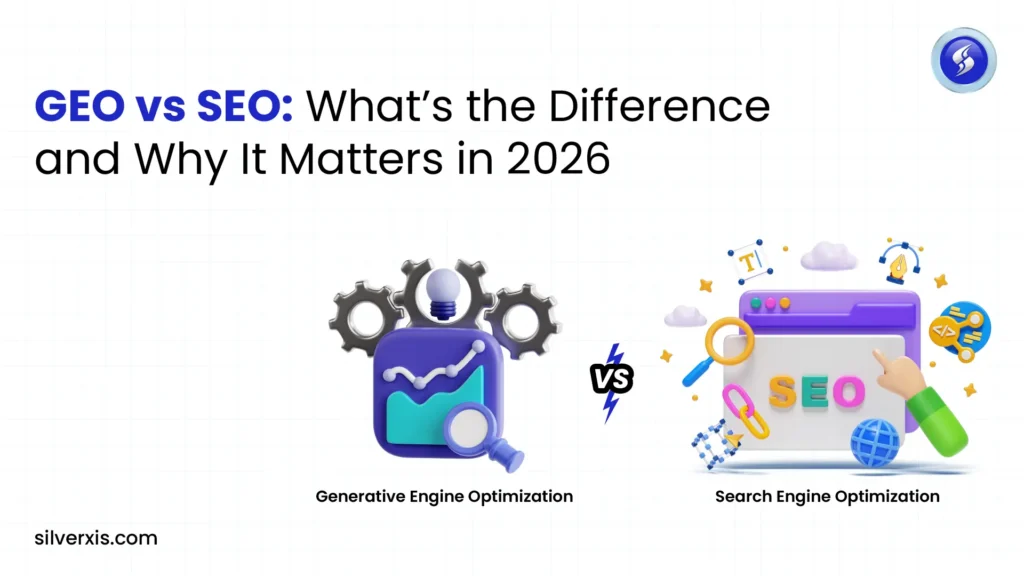
With AI models such as ChatGPT and Gemini on the rise, GEO is no longer just about location; it’s about how AI-driven search and localized experiences create real value online. AI is allowing businesses to connect with their audience in more relevant, personalized, and location-aware ways. What once was a tactical approach has now grown and will become a core component in how people discover, engage, and interact with brands in today’s digital society. Because, among other things, search engines gradually turn into “answer engines” and mobile connectivity becomes the heartbeat of consumer behavior. This blog explains the critical differences between GEO and SEO, clearly spells out why each is necessary in 2026, and goes on to give practical ways in which you can combine them to make your business triumph in this competitive environment. The New Search Reality In 2026, user behavior has shifted from “searching for information” to “demanding immediate solutions.” Whether it is an AI agent suggesting the best coffee shop around or a classic search engine ranking a B2B service provider, visibility is no longer about simply being on page one; it’s about being in the right place at the right time. Now, Google and other search engines give more importance to E-E-A-T, or Experience, Expertise, Authoritativeness, and Trust. These are fueled by signals in the real world or AI-driven intent analysis. On the other hand, geo-marketing became a driver for “phygital” growth, a mix of physical and digital experiences. GEO Marketing- Precision at Scale GEO Marketing (Generative Engine Optimization) is the practice of optimizing content specifically for Large Language Models (LLMs) and generative search engines. It ensures that when an AI “thinks,” it chooses your data as the most relevant answer. What it is in 2026: Citation Targeting: Moving beyond keywords to ensure that your brand is cited as a primary source in the AI summary. Intent-Fencing: Instead of having a radius, we set up a “fence” around specific user intents and complex searches so that your business comes up when a user asks for expert suggestions. Authoritative Signaling: Using structured data and verified citations to trigger “trust alerts” within an AI’s knowledge graph. In the year 2026, GEO marketing will be thebenchmark standard of ROI, since it is intent-based, meaning it follows the intent through a conversation. When a user asks an artificial intelligence, “What is the best way to scale my IT infrastructure?” This is giving a high-intent signal, which is what GEO is intended to identify. SEO – The Source of Organic Authority While GEO is about being the “answer,” Search Engine Optimization (SEO) remains the master of the “source.” It is the strategic process of optimizing your digital presence to ensure your website remains a pillar of authority that AI engines want to pull from. In 2026, SEO services for businesses focus on: Information Retrieval: Ensuring your site architecture is so clean that AI crawlers can effortlessly extract data for “AI Overviews.” Topical Authority: Moving away from “keyword stuffing” to “entity-based” content. In 2026, search engines rank “entities” (verified brands/people) rather than just words. User Experience (UX): With mobile driving over 62% of global traffic, site speed and “Core Web Vitals” are the baseline for any SEO strategy for businesses. GEO vs. SEO: What is the Difference? To build a winning strategy, you must clearly distinguish how GEO and SEO differ in execution and purpose. One gets you mentioned; the other gets you found. Feature GEO (Generative Engine Optimization) SEO (Search Engine Optimization) Primary Goal Become the “cited answer” in AI responses. Build long-term authority and organic traffic. Visibility AI-generated summaries and chat interfaces. Traditional SERP (Search Engine Result Pages). Mechanism Citation optimization and Natural Language. Content, Backlinks, and Technical Health. Timeline Instant relevance (Real-time AI learning). Long-term (Compounding results). Cost Basis Targeted content and citation strategy. Primarily investment in content & tech infrastructure. The Benefits of GEO Marketing Services For businesses looking to capture the “Zero-Click” generation, GEO marketing services are the ultimate conversion tool. Natural Language Reach: Your audience isn’t “IT staffing”; it’s the intricate questions people pose to their AI assistants at 2:00 PM on a Tuesday. Real-time Relevance: With AI and GEO by 2026, your content’s visibility can change dynamically according to trending topics or sentiment in the online community. Response Generation: Statistics show that 41% of users now trust AI-summarized recommendations over traditional ads. SEO Benefits: The 2026 Outlook Traditional SEO has evolved into Search Everywhere Optimization. If your business isn’t optimized for organic search, you simply don’t exist in the AI’s “knowledge graph.” AI Search Visibility: To be cited by ChatGPT or Gemini, your site must have a clean structure and verified facts. This is the new definition of “ranking.” Cost-Effective Longevity: A high-ranking organic page continues to drive leads for years compared to the fleeting nature of paid digital ads. Building Trust (E-E-A-T): In an era of AI-generated noise, 2026 consumers crave human-led expertise. SEO allows you to showcase the credentials, original research, and case studies that prove your value. Also Read: How Businesses Can Leverage SEO and Digital Marketing for Maximum Growth When is GEO Marketing the Most Effective Lead with GEO marketing when you are in industries that require immediate trust and direct answers: Consulting & Professional Services: Providing instant answers to complex “How-to” queries. Tech & SaaS: Being the recommended solution when users ask for feature comparisons. High-Volume B2C: Driving immediate brand awareness through AI-driven recommendations. When SEO is the Priority Invest heavily in SEO services for businesses when: Long-term Brand Building: You want to be the “go-to” authority that AI engines always reference. Deep-Funnel Research: Your audience demands long-form whitepapers and in-depth blogs to make a purchase decision National/Global Expansion: Your goal is to own the organic space across multiple search platforms. Combining GEO + SEO: The Power of “Phygital” Logic In 2026, the most successful brands don’t choose one; they integrate both. We call this a “Phygital” approach to data, merging your Physical authority with Digital generative relevance.
Nearshore & Offshore IT Staffing: Benefits, Risks and Best Practices
There has been a major shift in the global tech talent acquisition scene. As the need for skilled talent exceeds the domestic capacity, the rise of distributed development teams has migrated from being a “cost-saving strategy” to being the primary global approach to engineering. For today’s CTOs, VPs of Engineering, and HR leaders, the primary challenge is no longer just finding talent; it’s deciding where that talent should live and how they should integrate into the existing company culture. Navigating the nuances of nearshore vs offshore IT staffing is more than a geographical exercise; it is a high-stakes strategic decision that directly impacts your product velocity, code quality, and the bottom line. Whether it’s to source a qualified offshore developer or to align with a nearshore software development firm, this guide provides the in-depth insights required to navigate the complexities in IT outsourcing in today’s technology landscape. Understanding Offshore IT Staffing Offshore IT staffing means hiring technology professionals in other countries, especially those that have a considerable difference in their time zones, such as 8 to 12 hours apart. A company based in either North America or Western Europe would have to collaborate with talent sources in either Southeast Asia (countries like India, Vietnam, Philippines) or Eastern Europe. The offshore development team model is built on two primary pillars: massive talent access and radical cost reduction. In this arrangement, offshore IT staffing services act as the bridge, managing the administrative heavy lifting, recruitment, and local compliance, allowing the client to scale an entire engineering department in a fraction of the time it would take locally. Strategic Advantages of the Offshore Model Cost Efficiency: It continues to be one of the prime forces. By expanding into markets where the cost of living is lower, companies can cut their costs of labor and operations by 60% or even more. Access to Global Talent Pool: It might take several months for companies to search for a Senior DevOps Engineer, but the global talent pool allows for instant access to specialists in Machine Learning, Artificial Intelligence, and Blockchain. “Follow the Sun” Productivity Cycle: A time difference of 12 hours gives you the edge. Your team can deliver the work at 5:00 PM, and the offshore team can pick it right away. Scalability in Operations: If you require scaling up resources in preparation for launching a new product or scaling down resources after completion of delivery, you do not need the complication of layoffs. Navigating the Risks of Offshoring Despite the advantages that can be gained from offshoring, there are still some disadvantages. The most common of these is communication friction. A simple question made at 9 AM in New York may not be answered until 9 PM. This can create ‘dead time’ that can hold a sprint. In addition, the issues of data security and IP risks need to be managed very strictly. Doing business in other countries entails dealing with varying legal systems. However, to be able to manage such challenges, it becomes imperative to have an IT staffing services provider who is SOC2 compliant and has an enforceable NDA. The Rise of Nearshore IT Staffing In contrast, nearshore IT staffing means outsourcing IT work to developers in neighboring countries or within the same general region. For a US company, this usually means Latin America, Mexico, Colombia, Argentina, while for a German firm, it could be Poland or Romania. The defining characteristic of nearshore development services is proximity. Because these teams are in similar time zones, they can operate in tandem with your in-house staff. This “business as usual” feel is why so many high-growth startups prefer nearshoring. Why Companies Choose Nearshore Software Development Real-Time, Synchronous Collaboration: This is the “Agile advantage.” Nearshore teams typically have a 6–8 hour overlap with your in-house staff. They can join your daily stand-ups, participate in Slack brainstorming, and address critical bugs the moment they arise. Cultural and Linguistic Alignment: Nearshore hubs often share educational backgrounds and work ethics with client countries, leading to developers who actively challenge product assumptions and provide proactive solutions. Travel Convenience: If a project requires a high-touch approach, visiting a team in Mexico from Texas is a short flight, making quarterly in-person planning sessions both affordable and feasible. Stronger Legal Protections: Many nearshore regions have modernized their legal frameworks to align with major markets (such as the USMCA for North America), providing more familiar recourse for intellectual property protection. Why Companies Opt for Nearshore Software Development Real-Time Synchronization Collaboration – This is what we call the ‘Agile advantage.’ Not only do Nearshore teams overlap by 6-8 hours, but they also get to attend your daily scrums, engage in your Slack brainstorming sessions, and fix priority bugs right when they pop up. Cultural and Linguistic Synergies: Nearshore solutions are likely to have comparable schooling standards and work culture to that of the target country, meaning that the developers brought on board will not only “take tickets” but instead question product ideas and provide proactive solutions. Ease of Travel: If a particular project is of the high-touch variety, the easy travel between Mexico and Texas makes it cost-effective to travel to a team for quarterly planning meetings. Higher Legal Protections: Most nearshore locations have either modernized their laws to bring them in line with major markets (such as USMCA in the case of North America) and thus are more familiarly protected. The Trade-offs of Nearshoring In this, the most immediate risk would be the reduced cost savings. Nearshore pricing typically includes more than offshore pricing. Furthermore, as nearshore locations tend to be smaller than large processing centers such as India, the availability of personnel with hyper-specialized or uncommon scripting languages might be a factor. Nearshore vs. Offshore – Which Model Fits Your Roadmap? Choosing the right partner isn’t about finding the “best” geography; it’s about matching the model to your global engineering strategy. Feature Offshore Staffing Nearshore Staffing Primary Goal Maximum cost savings & 24/7 coverage High-velocity Agile & collaboration Time Zone 8–12
The Digital Transformation Roadmap for Growing Businesses
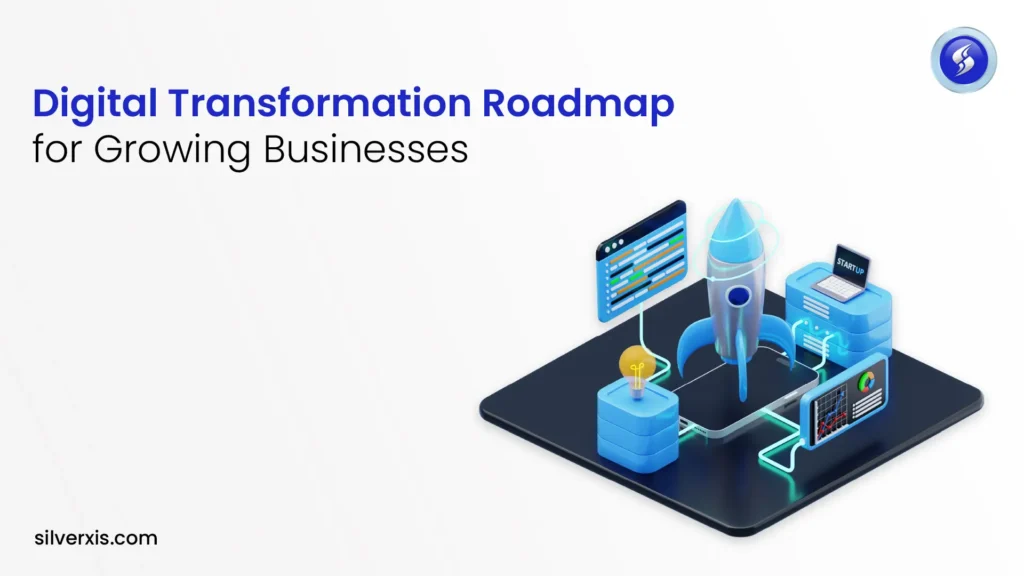
Digital transformation helps growing businesses unlock growth and lead their industries. This change enhances innovation, streamlines operations, and maximizes potential for expansion, keeping businesses competitive. A digital transformation roadmap should be tailored to your specific industry and business size, ensuring technology investments align with unique long-term goals. Use ‘Empower innovation to lead with technology’ to guide decisions and highlight technology’s role in your industry-specific growth. 1. Why Growing Businesses Must Embrace Digital Transformation Today’s business environment values speed, data, and customer experience. As companies expand, complexity rises. To succeed, businesses need efficient operations and a seamless customer journey. Importance of a Clear Roadmap A comprehensive digital transformation roadmap provides: Understanding: Allow your team to instantly grasp future-state processes, creating a shared vision for all stakeholders. Focusing each technology investment on key business outcomes can make your team feel empowered and capable of steering your organization toward growth and success. By navigating change confidently and avoiding wasteful technology purchases, your team can feel more secure and in control of your transformation journey. Performance Tracking: Establish and monitor clear, defined KPIs from the outset, enabling you to track ROI effectively and make data-driven decisions. The aviation industry shows the impact of digital transformation. The global digital aviation market, valued at $34.53 billion in 2021, is projected to reach $65.11 billion by 2029, with an 8.03% CAGR. For mid-market businesses, using AI for predictive maintenance or adding mobile solutions for customer interaction brings similar efficiency and satisfaction gains. Start with small, scalable technology investments for immediate and long-term benefits. 2. Understanding Digital Transformation Digital transformation means integrating technology across business areas, fundamentally changing how work is done and value is delivered. It goes beyond digitizing records by transforming models and processes. Subscription models have changed sectors that relied on one-time sales. Streaming services, for example, offer ongoing value through memberships, shifting revenue to subscriptions, and improving customer engagement. Benefits for Scaling Companies Digital transformation offers both immediate and long-term value for scaling companies: Benefit Immediate Value Long-Term Value Operational Efficiency Automation of routine tasks reduces human error. Optimized resource allocation and lower operational costs. Customer Experience Faster service, instant digital feedback loops. Hyper-personalized services, increased customer loyalty, and retention. Agility & Innovation Quick adoption of new market trends. Foundation for new business models and revenue streams. Data-Driven Decisions Real-time performance dashboards. Predictive analytics for strategic forecasting and risk management. 3. Digital Maturity Assessment Before planning your transformation, it is essential to understand your starting point. A thorough digital maturity assessment is the first step. To make this assessment more personal, consider conducting a quick self-diagnosis. Evaluate Current Systems and Identify Gaps This involves a holistic audit of your: Technology: Are your core systems (ERP, CRM, finance) legacy, cloud-based, or fragmented? Assess your organization’s readiness for change by evaluating workforce attitudes and leadership support. Understanding cultural factors helps address resistance and ensures your team is prepared for digital transformation success. Processes: Where are the manual bottlenecks, paper trails, and cross-departmental inefficiencies? Identifying these gaps helps you prioritize IT modernization and focus resources where they will have the greatest impact. 4. Building a Digital Transformation Strategy A digital transformation strategy connects your current state to future goals. Delaying this can cause you to fall behind competitors who leverage new technologies to gain market share and reshape customer expectations. Vision, Goals, KPIs Define a vision, such as ‘real-time, end-to-end supply chain visibility.’ Set specific, time-bound goals like ‘Reduce order fulfillment time by 40% in 18 months’ or ‘Increase Net Promoter Score by 15 points.’ Use these goals to measure performance. Aligning Digital Goals with Business Goals Every digital initiative should support business objectives like revenue, cost reduction, or market expansion. Alignment is key to transformation success. 5. Modernizing Business Processes Technology enables change, but true transformation comes from modernizing business processes. Automation Opportunities and Removing Bottlenecks Look for high-volume, repetitive tasks that can be automated. This includes: Financial Closings: Automated reconciliation and reporting. Customer Support: AI-powered chatbots for tier-one inquiries. Inventory Management: Real-time tracking and automated re-ordering. Legacy System Replacement Outdated systems are often the main bottleneck. Replace them with modern, scalable solutions that provide open APIs for seamless integration across the business. Also Read: Transitioning from Tech Expert to Digital Visionary: Five Leadership Tips for the C-Suite 6. Selecting the Right Technologies To tackle business challenges and achieve goals, it’s essential to adopt technology in alignment with clear objectives. Here are key digital transformation solutions based on the problems they address: Enhance Scalability and Flexibility: Cloud Computing provides the necessary scalability and flexibility for growing businesses, allowing for seamless expansion and resource management. Personalize Customer Engagement: Artificial Intelligence (AI) and Machine Learning (ML) enable predictive analytics and dynamic pricing strategies, leading to personalized customer experiences and effective engagement. Automate Repetitive Tasks: Robotic Process Automation (RPA) is ideal for automating highly structured, repetitive tasks, freeing up human resources for more strategic activities. Streamline Business Functions: Enterprise Resource Planning (ERP) and Customer Relationship Management (CRM) platforms offer integrated, modern solutions to manage core business functions and customer data efficiently. 7. Change Management Strategy Digital tools succeed only with workforce adoption, making change management essential. Address fears about loss of mastery or shifting roles to support adoption. Acknowledging these emotions not only builds trust but also encourages buy-in. Leaders should actively communicate how changes will be guided and supported, emphasizing continuous learning and the enhancement of skills. By fostering an empathetic environment, organizations can ensure smoother transitions and full utilization of new digital tools. Training Teams and Cultural Readiness A strong change management strategy focused on the workforce is essential for successful transformation: Leadership Involvement: Executives must actively sponsor and champion the change, communicating the ‘why’ to the entire organization. Comprehensive Training: Provide role-specific training and continuous upskilling to close any skills gaps. Cultural Shift: Promote experimentation, learning, and data-driven decision-making to encourage employees to adopt new digital tools. 8. Implementation Roadmap (Step-by-Step) The roadmap divides the strategy into actionable phases. Quick Wins First Prioritize projects with
How Staff Augmentation Helps Companies Scale Tech Teams Faster
Tech-driven businesses rarely grow at a predictable pace. One month, product development moves steadily, and the next, a sudden customer demand or new feature roadmap forces teams to ramp up quickly. Traditional hiring can’t keep up with this reality. Long notice periods, limited local talent availability, and slow screening cycles often delay critical releases. This is why companies are turning toward faster, more flexible scaling methods like IT staff augmentation services, which help engineering leaders add talent without slowing down momentum. What Is Staff Augmentation Staff augmentation is a resourcing model where companies temporarily add skilled professionals to their existing teams. Instead of running lengthy recruitment cycles, organisations partner with an IT staff augmentation company to plug immediate skill gaps. It fits perfectly between full-time hiring and outsourcing. You retain project control while gaining access to vetted tech talent that can integrate into your workflows from day one. Why Tech Scaling Is Hard Today Scaling engineering teams in the current climate is no simple task. Global talent shortages continue to affect organisations of all sizes. According to McKinsey, 87 percent of employers either already struggle or expect to struggle with skill gaps. Add increasing project volume, shorter release cycles, and the pressure to innovate, and it becomes obvious why many teams feel perpetually understaffed. Staff Augmentation Benefits Companies exploring talent shortage solutions often find staff augmentation the most practical approach because it delivers: Flexibility: Scale up during peak phases and scale down when the workload settles, with no long-term commitments. Cost control: Pay only for the expertise you need, no overheads associated with full-time roles. Access to specialised skills: Whether you need a cloud architect, data engineer, or mobile developer, the talent pool is immediate and global. Businesses focused on agility view the staff augmentation model as a bridge that keeps projects moving regardless of internal hiring constraints. Engineering Scalability and Team Extension An IT team extension model enables companies to expand teams without restructuring. Developers join your ongoing sprint cycles, follow your engineering guidelines, and collaborate with your internal tech leads. It feels like onboarding a new teammate, only faster. Real-time expansion is especially useful during new product modules, infrastructure upgrades, or performance optimization efforts. Flexible Staffing Models Every company’s staffing requirement looks different. That’s why flexible staffing models exist to support varied needs: Project-based: Ideal for short-term workloads or proofs-of-concept. Skill-based: Perfect when niche expertise is needed temporarily. Full-time extension: A long-term model resembling an extended engineering arm. This ability to choose your model gives organisations clarity and budget control. Remote Developer Integration Remote developers today blend easily into existing engineering cultures thanks to collaboration tools. Slack, Jira, GitHub, and Zoom help distributed teams stay aligned. Companies hiring through a staff augmentation company in the USA often find that remote talent works as seamlessly as local engineers. What matters most is communication clarity, expectation setting, and consistent feedback loops. Contract-Based Developer Hiring Contract-based hiring gives businesses an operational advantage. It reduces HR processing, eliminates onboarding overheads, and removes lengthy hiring cycles. For technology teams working against demanding timelines, this model avoids delays while ensuring quality. Many early-stage startups and scaling companies prefer contract-based developers because they deliver immediate productivity without increasing permanent headcount. Hybrid Staffing Models Hybrid setups combine in-house employees with remote extension teams. This modern approach leverages the stability of internal staff and the flexibility of global experts. Hybrid models are particularly helpful for backend upgrades, cloud migrations, QA expansions, and frontend rebuilds. Teams can operate across time zones, accelerating release cycles and improving turnaround time. Extended Development Teams Many businesses prefer extended development teams because they offer long-term value. Unlike outsourcing, extended teams work consistently with your organisation, developing a deep understanding of your systems, architecture, and culture. They’re ideal for sustained product development and continuous delivery environments. When Staff Augmentation Works Best Staff augmentation shows the strongest impact in specific scenarios: Product launches requiring rapid skill expansion Scaling engineering teams during high-growth phases Short-term skill gaps that would otherwise slow down progress A hypothetical example: Imagine a fintech startup preparing to launch a new payment module. They need three backend developers and one DevOps engineer for twelve weeks. Traditional hiring would take two to three months, delaying the launch. Instead, they engage IT staff augmentation services and onboard vetted developers within days, ensuring the release goes live on time. Staff Augmentation vs Hiring Agencies Although often confused, augmentation partners and hiring agencies are very different. Aspect Staff Augmentation Hiring Agencies Speed Talent available almost immediately Lengthy recruitment cycles Cost Pay per hour or month Placement fees + HR costs Reliability Developers are pre-vetted and project-ready Quality varies, requires your internal screening This comparison shows why so many tech companies avoid traditional hiring when delivery timelines matter. Future of Staff Augmentation The landscape is evolving quickly. AI is improving candidate screening, skill assessment, and developer matching. Global talent networks make accessing niche skills easier than ever. Companies exploring top IT staff augmentation companies now expect quicker onboarding, stronger compliance, and more efficient workflows. The future clearly leans toward frictionless hiring supported by automation and global accessibility. Conclusion Scaling tech teams doesn’t have to be slow or complicated. With the right partner, companies can overcome hiring delays, fill skill gaps instantly, and accelerate delivery pipelines. Whether you’re building new features, revamping architecture, or launching a new product, augmentation offers unmatched speed and adaptability. If you’re ready to scale intelligently, explore how augmentation can support your roadmap. Visit our page to learn more or get started: Explore Our IT Staff Augmentation Services. Scale your engineering team, instantly explore our IT staff augmentation services, or hire remote developers today. FAQs What is the most important step in cloud migration? The readiness assessment is crucial because it identifies technical gaps, risks, and migration feasibility. Can we migrate everything to the cloud at once? You can, but the best practice is a phased approach to avoid disruption and reduce risk. How do I ensure cloud security after
Cloud Migration Checklist: Everything a Business Needs Before Moving to Cloud
Cloud migration is transforming how businesses operate. It offers scalability, flexibility, and long-term cost benefits. With cloud adoption growing across industries, many companies are now accelerating their transition. But to move successfully, organizations need a well-prepared plan. This cloud migration checklist ensures every step is clear before shifting systems, applications, and data to the cloud. By the end, you’ll have a clear roadmap and a confident starting point for your cloud journey. Cloud Readiness Assessment Before moving workloads, begin with a readiness assessment. This evaluation helps determine whether your current environment, people, and processes are equipped for the transition. A readiness assessment typically includes: Reviewing current servers, applications, and databases Identifying legacy tools that may require modernization Understanding application dependencies and integration requirements Evaluating network readiness for cloud access Beyond technology, assess your team’s capabilities. If skills like cloud infrastructure planning, automation, governance, or compliance are lacking, training or partnership with a cloud consulting company may be necessary. A solid readiness assessment sets the foundation and prevents costly surprises later in the process. Cloud Migration Requirements Once readiness is confirmed, document your requirements. This step in the cloud migration checklist ensures alignment between technical expectations and business outcomes. Key requirement considerations include: Performance benchmarks Compliance certification needed (HIPAA, ISO, PCI DSS, etc.) Estimated storage and compute requirements Workload availability and uptime goals Budget approval and expected ROI Cost plays a major role. Cloud services operate on a consumption model, so forecasting usage correctly prevents unexpected bills. Organizations often run a pilot workload first to benchmark costs before full-scale migration. By finalizing requirements early, you establish guardrails and prevent rework later in the migration process. Choose the Right Cloud Migration Strategy All workloads don’t require the same migration approach. Selecting the right migration strategy ensures efficiency and minimizes disruption. Popular strategies include: Rehost (Lift and Shift): Fastest method, moving workloads without changes. Replatform: Minor adjustments to use managed cloud services. Refactor: Rewriting applications to leverage cloud-native capabilities. Retain or Retire: Keeping some systems on-premise or removing outdated ones. Some organizations prefer a hybrid or multi-cloud model. Hybrid setups support regulated workloads that must remain local, while multi-cloud enables flexibility, redundancy, and vendor diversification. Choosing the correct strategy helps define timelines, cost structure, and complexity levels. Start Your Cloud Journey & Future-Proof Your Business easily Connect with us Cloud Infrastructure Planning In the cloud migration checklist, next move into infrastructure planning. This step ensures the cloud environment supports current and future workloads efficiently. This step includes designing the architecture and validating the resources that applications will require. Core elements of infrastructure planning: Network layout and security zones Virtual machines or container runtime environments Data storage tiers Load balancing and traffic routing Backup and disaster recovery setup Monitoring and observability tools Resource provisioning should align with scalability requirements. Auto-scaling policies allow workloads to adjust automatically to usage, optimizing performance and cost. Data Migration Preparation Data migration preparation is one of the most sensitive parts of the cloud migration checklist. Data inaccuracies, duplication, or lack of structure can lead to failure. Key tasks include: Cleaning data and removing outdated or redundant files Classifying data based on usage sensitivity and importance Creating backup strategies and version control Mapping application and data dependencies Planning the order of migration matters because some systems rely on shared data layers. A dependency map prevents downtime or broken workflows. Cloud Security Checklist Security must be embedded in every stage of the migration. A strong cloud security checklist protects systems, applications, and data while ensuring compliance. Important elements include: Identity and Access Management (IAM) Multi-factor authentication and least privilege access Encryption at rest and in transit Key and certificate management Threat detection and monitoring Data Loss Prevention (DLP) Logging and governance policies Security policies should also include incident response and continuous monitoring. With proper security controls, your migration remains protected, compliant, and future-ready. Application Cloud Migration Steps Migrating applications involves more planning than moving raw data. Consider containerization, modernization, and orchestration during this phase. It requires structured planning to ensure performance stability. Application migration steps may include: Identifying applications suitable for rehosting versus refactoring Migrating microservices or containerizing workloads where possible Testing integrations, including third-party software and APIs Creating a phased migration plan to avoid downtime A staggered or parallel rollout prevents operational risk and enables a smooth user transition. Cloud Testing Process Once workloads are in the cloud, testing confirms everything performs as expected. The cloud testing process validates reliability, security, and functionality. Key testing categories should include: Performance Testing Simulates real usage patterns to measure speed and responsiveness. Load Testing Evaluates how the system handles high levels of traffic. Security Testing Includes penetration testing, vulnerability scans, and IAM verification. Disaster Recovery and Failover Tests Ensures availability if outages occur. Testing helps confirm that requirements have been met and that workloads behave consistently after deployment. Post-Migration Optimization Once the migration is complete, the next step is post-migration optimization. This is where organizations refine performance, improve efficiency, and control cost. Optimization may include: Applying automated scaling Monitoring real-time usage and performance Removing underutilized or idle resources Using reserved instances or spot pricing models Enabling continuous security monitoring Reviewing compliance alignment regularly The goal is long-term operational excellence, not just successful migration. Final Pre Cloud Migration Checklist Before pushing workloads live, review the final pre-migration checklist: Cloud readiness assessment completed. Security policies and IAM are in place. Cloud migration requirements documented. Backup and rollback plans are ready. Data cleaned and classified. Migration strategy confirmed. Infrastructure deployed and tested. Application migration timeline approved. Cost governance tools activated. Disaster recovery framework verified. This final validation ensures a structured transition rather than a rushed one. Conclusion A successful migration for cloud depends on preparation, planning, and execution. This cloud migration checklist gives your team clarity, reduces risk, and ensures every workload is migrated efficiently. Whether you’re preparing infrastructure, securing data, testing applications, or optimizing cost, each stage plays a key role in long-term cloud success. If you’re looking for expert help, our certified