
Lexcru
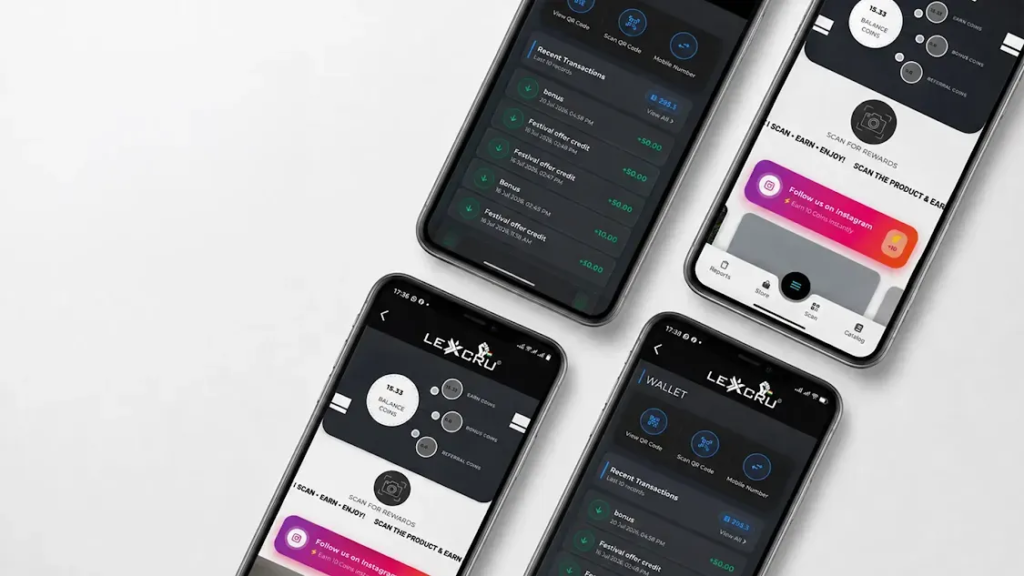
Home Turning a Rental Hardware Business Into an Enforceable Subscription Platform SilverXis connected a water purification device to a cloud entitlement system so payment and service finally matched, without a technician in the loop. Home Turning a Rental Hardware Business Into an Enforceable Subscription Platform SilverXis connected a water purification device to a cloud entitlement system so payment and service finally matched, without a technician in the loop. Client Overview Lexcru operates water purification units on a rental and subscription basis, working through a network of dealers, sub-dealers, and field technicians who handle installation and ongoing service. In this business, the hardware sits in a customer’s home before any revenue is collected, so the whole model depends on one thing working reliably: the connection between payment and service. SilverXis was brought in to build that connection, end to end. That meant the hardware, the firmware, the cloud service behind it, and the field-facing apps that operate the network around it. The Challenge Before this engagement, every part of Lexcru’s payment-to-service loop depended on someone physically visiting the unit. Once a device was installed, a customer who stopped paying kept getting service anyway. There was no way to suspend a unit remotely, so the recurring revenue model ran on goodwill rather than enforcement. Every suspension and every restoration meant dispatching a technician, and that visit routinely cost more than the subscription it was meant to protect. Enforcement, when it happened at all, ate into margin instead of protecting it. Paying customers had it worse in some ways. Someone who settled their account still waited days for a technician to come restore service. That meant the slowest, most frustrating experience in the system landed on the customers who had already done the right thing. There was also a security dimension. Any mechanism capable of disabling a product becomes a target, and a controller that could be spoofed, bypassed, or replayed would undermine the entire commercial model. At the same time, payment confirmation is never instant. A hard cutoff at the moment of expiry would punish customers whose payment was simply still processing. On top of the hardware and payment problem, coordination across the field network was informal. Technicians, dealers, and sub-dealers tracked assignments and service history by phone, with no shared record of what had been completed. Management had no visibility into field activity, and dealers couldn’t answer a customer’s status question without calling around. The SilverXis Approach SilverXis worked across the full stack of a connected product, from the circuit board up through firmware, cloud services, and field workflow, because each layer’s design depended on the ones around it. The team started with the hardware itself, designing a custom PCB around an MCU that supports both BLE and Wi-Fi, with relay and solenoid power control for the purification unit and status LEDs a technician can read without tools. On top of that, each controller was provisioned with a unique device identity, using cryptographically signed subscription policies so a unit only accepts an entitlement instruction it can verify came from the platform. Suspension and restoration were built around a configurable grace period, so a genuine payment-processing delay doesn’t cost a paying customer their water. For field provisioning, SilverXis built an app-based BLE workflow that lets a technician commission a new unit in minutes, with no specialist training or network connection required at the point of install. Behind the device sits a cloud policy and telemetry service that holds subscription state, issues signed policies, and receives regular check-ins from every unit in the field. When a payment clears, the service reissues the device’s policy directly, restoring access within moments, with no technician involved at all. An over-the-air update pipeline was built alongside this so the deployed fleet can be patched and improved without a truck roll to a single unit. To bring the field network onto one system, SilverXis delivered a single Flutter application shared by technicians, dealers, and sub-dealers, with role-based access so each user sees only what their role needs. That avoided the cost and rollout complexity of three separate apps. A ReactJS admin portal, running on Laravel backend APIs, gives management a live view of device state, technician workload, service history, and dealer territory performance. What Was Built The delivered system covers four coordinated layers: Custom IoT controller hardware: a purpose-built PCB with BLE and Wi-Fi connectivity, relay/solenoid power control, and status LEDs for field diagnostics. Secure firmware and policy enforcement: per-device identity, signed subscription policies, automatic expiry shut-off, and configurable grace-period handling. BLE provisioning and technician workflow: app-driven Bluetooth commissioning for fast, tool-free field setup. Cloud policy, telemetry, and OTA service: the backend entitlement system issuing signed policies, ingesting telemetry, and pushing firmware updates fleet-wide. That backend is paired with the multi-role Flutter mobile app for the field network and the ReactJS/Laravel admin portal for management oversight. It’s one integrated system rather than separately sourced pieces stitched together. Technology and Expertise The engagement drew on PCB design and firmware engineers working alongside BLE/Bluetooth developers, cloud IoT platform developers, and a full-stack IoT engineering team spanning hardware, embedded firmware, mobile, and backend. Security was built in at the firmware layer rather than added afterward. Device identity, signed policy enforcement, and tamper resistance were part of the original design, not a later patch. On the software side, the mobile layer was built in Flutter to serve technicians, dealers, and sub-dealers from one codebase, while the admin portal runs ReactJS over Laravel APIs. The OTA update pipeline and cloud telemetry service reflect the kind of hardware-software integration engineering a connected-device business needs once hardware is live in thousands of homes it can’t easily visit. Results Connecting entitlement to the device itself turned Lexcru’s rental model from something that depended on customer goodwill into one with a technical basis for recurring revenue. Subscription status is now enforced at the unit, not tracked and chased after the fact. That same design removed field cost from the routine parts of the loop. Suspension and
Swiss Hotels
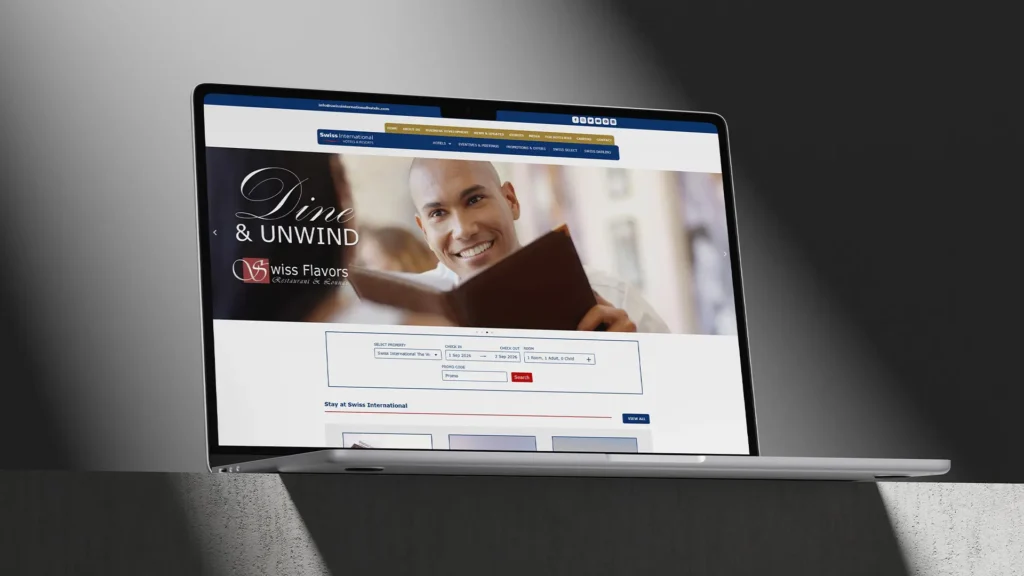
Home Turning a Digital Presence Into a Direct Booking Channel SilverXis rebuilt a global hospitality group’s web platform to match its brand standing and win reservations back from intermediary channels. Home Turning Sixty Disconnected Systems Into One Data-Driven Platform SilverXis rebuilt a global hospitality group’s web platform to match its brand standing and win reservations back from intermediary channels. Client Overview Swiss International Hotels is a global hospitality group with more than forty years of operating history, managing a portfolio of properties across multiple markets under a shared brand standard. In hospitality, the digital presence isn’t a marketing asset sitting alongside the business. For most guests, it’s the first and often only encounter with the brand before arrival, and it carries the full weight of proving the group’s service standard is real. SilverXis was engaged to deliver a modern web platform and direct booking experience for the group, built to present an international multi-property portfolio coherently and give guests a reservation path that stays on the group’s own channel. The Challenge The group’s commercial position was stronger than its digital presence reflected, and that gap showed up in both brand perception and booking economics. Four decades of hospitality heritage were represented by a digital experience that didn’t convey it. For a guest evaluating an unfamiliar property in an unfamiliar city, that mismatch worked directly against the trust the group had spent decades earning. Bookings were also flowing through third-party travel platforms, which take a substantial commission on every reservation. The commission was the visible cost. The bigger one was that the intermediary, not the hotel, owned the guest relationship, the contact data, and every future chance to sell directly. An international multi-property group is structurally hard to present well. A guest looking for a property in a specific city on specific dates shouldn’t need to understand the group’s corporate organization just to find it. On top of that, guests were arriving from many regions on a wide range of devices and connection qualities, and a desktop-first experience was losing a meaningful share of that traffic before it ever reached a booking form. Underneath all of it sat a simpler problem: the hospitality standard that actually differentiated the group was evident in its properties but not in its digital experience, leaving the brand to compete on price and photography alone. The SilverXis Approach SilverXis structured the portfolio around how a guest actually searches, destination and dates first, so the right property surfaces quickly regardless of the corporate structure sitting behind it. The team implemented a booking interface on the group’s own platform, giving guests a complete path from discovery to reservation without ever leaving the brand’s channel. Around that booking path, the presentation layer was rebuilt to carry the group’s hospitality standard and heritage, so the qualities that set the properties apart are visible before a guest commits, not just experienced after arrival. Because most of the group’s traffic arrives on mobile, the experience was optimized for an international, mobile-first audience, with load performance and usability tuned for the device and connection range guests actually show up on. SilverXis also designed the funnel from property page to reservation to remove the friction points where hospitality booking journeys typically lose guests who were already committed to booking. To keep the platform current without creating a dependency on developer time, SilverXis built a content governance structure that lets the group’s own team maintain property detail, offers, and availability directly. What Was Built The delivered platform covers five coordinated pieces: Multi-property web platform: a modern group website presenting the international portfolio in a structure organized around guest search intent rather than corporate hierarchy. Direct booking interface: a reservation experience on the group’s own channel, covering the full discovery-to-booking path without routing through an intermediary. Brand and hospitality presentation: a presentation layer that carries the group’s forty-year heritage and service standard as a differentiator, not just a backdrop. Mobile-optimized experience: responsive delivery tuned for international mobile traffic across a wide range of devices and connection quality. Content management structure: a governance model that lets the group maintain property detail, offers, and availability without a developer in the loop for every change. Technology and Expertise This engagement called on hospitality software developers and hotel booking platform developers working across the full guest journey, from portfolio architecture to the booking interface itself. Responsive web developers and mobile-first developers led the performance work needed to serve an international audience arriving on inconsistent connections, while backend developers for hospitality handled the structure behind the booking flow and content governance. Delivering a coherent multi-property experience for an international hotel group is as much an information architecture problem as a technical one. SilverXis approached it with full-stack developers for property management who understood both sides: how a guest searches for a room and how a hospitality brand needs to be represented once that guest arrives on the page. Results Giving the group a complete discovery-to-reservation path on its own platform means guests now have a real, direct alternative to intermediated booking channels. Reservations made directly keep the guest relationship and contact information with the group rather than the third-party platform, which is the foundation for loyalty and repeat stays going forward. Guests can also reach the right property in the right destination without working through the group’s corporate structure, which reduces abandonment early in the booking journey. And the digital experience now reflects the group’s forty-year hospitality heritage, supporting the trust a new guest needs to extend rather than undermining it at first contact. Looking Ahead The platform delivery is complete, and it stands as a working example of a broader pattern beyond hospitality: an established brand doing excellent work in the physical world while a third-party channel intermediates its customer relationships and takes a share of every transaction. The fix isn’t just a better-looking website. It’s a digital experience credible enough, and a booking path direct enough, that the guest has no reason to route around it. With the
Rooted in Place: Winning Local in Sonoma County’s Generative Search Era
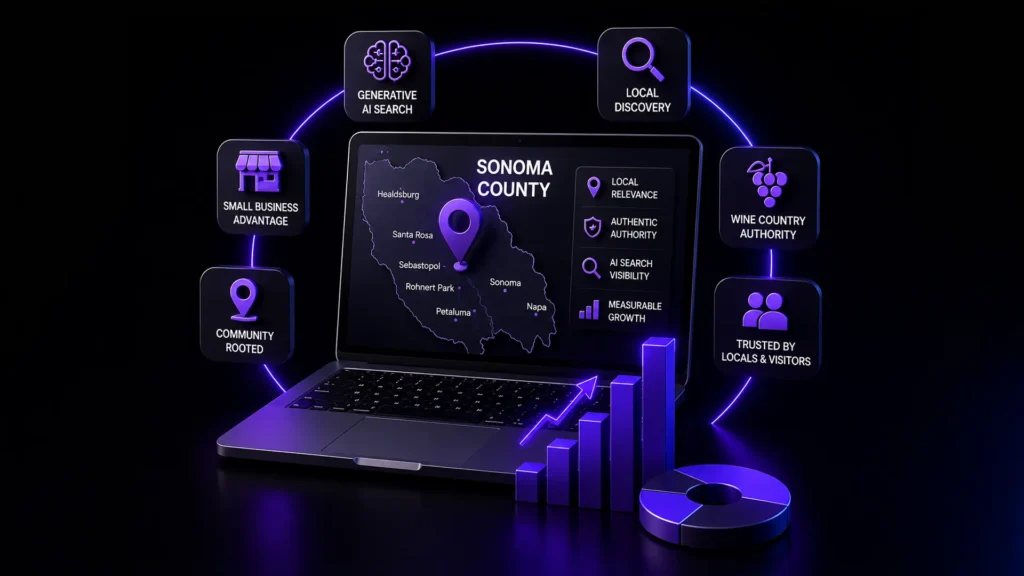
This paper is the third in a series examining how generative AI search is reshaping business discovery. The first paper, “The AI Search Window Is Open,” established the national case for why smaller, specialized organizations have a time-limited opportunity to build AI visibility ahead of larger competitors.
Cursor vs Claude Code for Enterprise Software Development

Cursor and Claude Code support different parts of enterprise software development. Cursor fits teams that prefer working inside an editor, while Claude Code is better suited to terminal-based, multi-step tasks. The right choice depends on security controls, review effort, pricing, team habits, and how well each tool performs on real development work.
Building Software for Your Business? Here’s Where to Begin

A website may look ready but still leave people unsure about the next step. This blog looks at what usually causes that gap, from unclear pages and weak proof to forms and follow-up that do not connect. It also explains how SilverXis plans websites around real customer needs, business goals, and the way leads are handled.
Custom Software Development Company Texas: Buyer’s Checklist

Use this buyer’s checklist to choose a custom software development company in Texas. Compare proposals, pricing, experience, support, and more.
Education Software Development Company Pricing and ROI

A school or training company can spend very different amounts on software, even when the project sounds similar at first. The cost changes with the people using it, the systems it connects to, and the work it replaces. This blog explains what affects the price and how to judge whether the investment is paying off.
Building a Startup? Start With MVP Development Services

A startup idea can get crowded with features before the first version is even ready. This blog explains how an MVP helps you begin with the part that matters most, see how real users respond, and decide what should come next. It also shares what to look for in the team building it.
AI Agent for SEO Strategy: Battle-Tested Insights from SilverXis
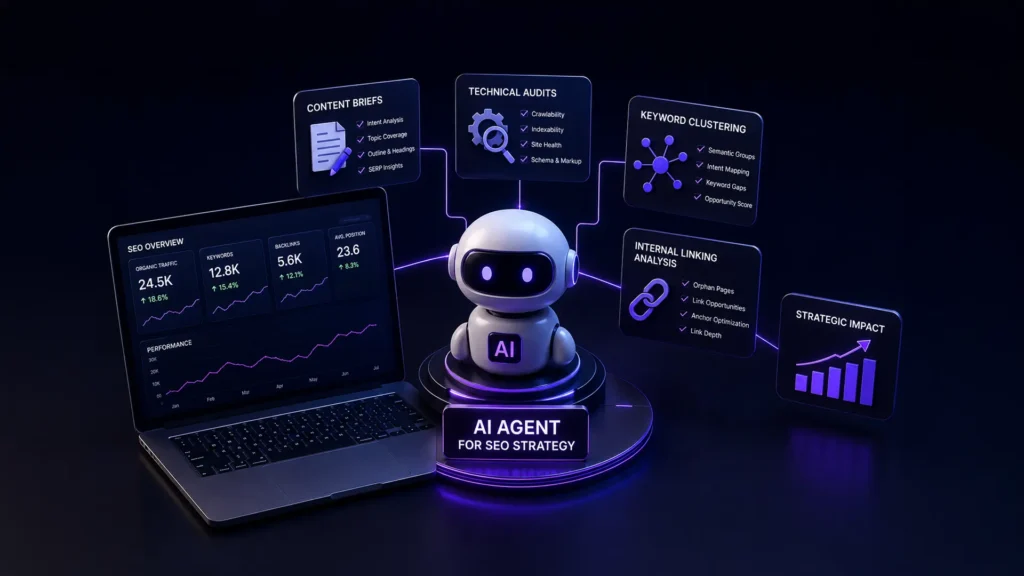
SilverXis has spent the better part of a year running an AI agent for SEO strategy across live client accounts, not as a proof-of-concept sitting in a slide deck, but as core infrastructure powering content briefs, technical audits, keyword clustering, and internal linking analysis. This report distills that operational experience into a practical field guide.
Strategies to Reduce Technical Debt in Agile Development

Technical debt can slow agile teams without being obvious at first. This blog explains how to reduce it through small, regular cleanup, better planning, stronger testing, and smarter modernization choices. It also shows why debt should be managed as part of delivery, not treated as work to fix later.