
Why Dev Agencies Are Watching Claude Mythos AI Closely
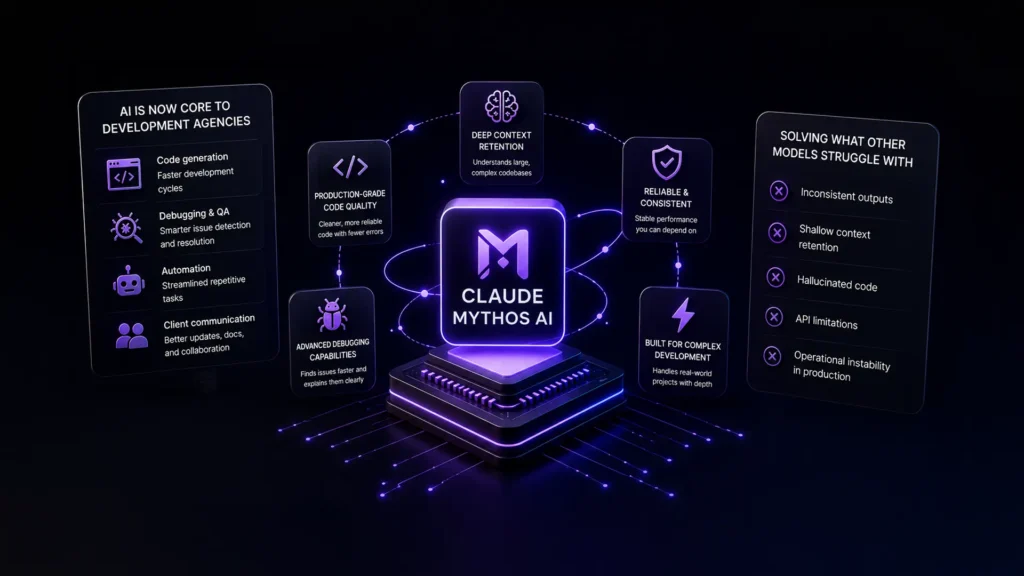
Artificial intelligence is no longer a side tool inside development agencies. It is becoming part of the operational infrastructure behind software delivery, product ideation, debugging, automation, and even client communication.
How Cloud Solutions for E-commerce Power Scalable Stores

When an e-commerce store starts growing, it rarely feels like a smooth curve. One month, everything runs fine. The next month, during a campaign or seasonal spike, things start slowing down. Pages take longer to load, checkout feels a bit unstable, and customers quietly drop off without saying anything. That is usually where the real problem starts showing. Not in sales, in infrastructure. And that is exactly where cloud solutions for ecommerce start becoming less of a technical upgrade and more of a survival layer for growing online stores. What Cloud Solutions for E-commerce Mean Today Today cloud solutions for ecommerce are not just about hosting websites. They are about running the entire e-commerce operation, storefront, backend systems, inventory, payments, analytics, and infrastructure, which can adjust based on demand. In reality, fixed servers that struggle under pressure, cloud systems scale up or down automatically. So if traffic increases suddenly, your system doesn’t slow down or crash. It expands. That’s the simple difference, and it changes how online stores operate. Because e-commerce traffic is never predictable. A single campaign, influencer mention, or seasonal sale can change everything in hours. Why Traditional Hosting Breaks Under E-commerce Growth Most online stores don’t start with the cloud. They start with basic hosting because it’s cheaper and easier. And for a while, it works. Though as traffic grows, cloud hosting for ecommerce starts becoming necessary because traditional setups begin to struggle with scale. You start noticing things like: slow product pages during peak traffic checkout delays during sales order sync issues with inventory sudden downtime during campaigns It doesn’t usually fail all at once. It declines slowly during high-demand periods. In many e-commerce scaling situations, especially during seasonal campaigns, performance often appears stable at first. Traffic looks normal, systems seem fine, and everything runs as expected in the early phase. But once the campaign started gaining momentum, traffic almost doubled within a short window. The system didn’t crash, but checkout started slowing down just enough for users to abandon carts. At first, the team thought it was a payment gateway issue. Later, it turned out to be simple infrastructure overload. That kind of silent failure is more common than people think. How Cloud Solutions Enable Online Store Scalability Scalability in e-commerce is not just about handling more users. It involves handling growth without breaking performance. Once this happens, online store scalability stops being just a technical term and starts becoming a real business concern. Elastic Infrastructure Handles Traffic Spikes Easily In cloud systems, infrastructure adjusts automatically when traffic increases. So during a product launch or seasonal sale, resources expand in real time. Then, when traffic drops, it scales back. This start avoids overpaying for unused infrastructure while still protecting performance during the peak of its demand. High Availability for E-commerce Platforms Using AWS A big reason why many companies choose AWS cloud services for e-commerce is their reliability. When traffic gets heavy or something unexpected goes wrong, they need the platform to keep running without interruption. Amazon Web Services (AWS) is built for that. It designs their systems, which are spread across multiple Availability Zones, which means if one zone has an issue, another can usually keep things moving in the background. That reduces downtime risk significantly, especially during high-traffic events. And in e-commerce, even a few minutes of downtime can directly affect revenue. Faster Load Speeds with Cloud-Based Architecture Speed is not just a technical metric in ecommerce. It directly affects conversions. Cloud-based systems improve performance using: CDN networks cached delivery distributed servers closer to users optimized database response times Even a small improvement in load time can reduce bounce rates noticeably. Secure Transactions Using Cloud Infrastructure In most real e-commerce cloud setups, security issues rarely come from the cloud infrastructure itself. What usually causes trouble is how access is set up and managed inside the system. Recent cloud security discussions in 2025 keep pointing to the same issues: small configuration mistakes, like overly broad permissions or weak access controls, are still behind many real-world cloud incidents. That structure is now standard in modern e-commerce setups. Key Cloud Solutions Used in E-commerce Ecosystems Most e-commerce businesses don’t rely on a single system. They use multiple connected cloud tools. Cloud Hosting for E-commerce Platforms Explained Cloud hosting for ecommerce platforms is the foundation layer. It supports uptime, performance, and scalability for the online store. Instead of fixed capacity, it allows flexible scaling based on demand. Best Cloud Hosting for E-commerce Performance Needs There is no single “best cloud hosting for e-commerce.” It depends on: business size traffic patterns regions served integration needs A small store and a global retailer will never need the same setup. Cloud ERP for Retail with Omnichannel Capabilities As businesses expand into multiple channels, complexity increases fast. A cloud ERP for retail and ecommerce with omnichannel capabilities connects inventory, finance, and order systems into one view. That reduces errors caused by disconnected systems and improves decision-making. Cloud WMS for E-commerce Warehousing and Fulfillment A cloud WMS for ecommerce warehousing and fulfillment helps manage stock movement, order picking, and shipping operations. Without it, fulfillment becomes harder to track as order volume grows. It brings visibility across warehouse operations, which directly improves delivery speed and accuracy. AWS Cloud Services for E-commerce Platforms Explained AWS cloud services for ecommerce include computing, storage, databases, and automation tools that support full-scale e-commerce systems. Most brands don’t use everything. They only use what matches their growth stage and operational needs. Common Mistakes That Limit E-commerce Scalability That is where online store scalability issues do not originate from technology itself. They come from delayed decisions. Common ones include: waiting until systems break before upgrading choosing hosting only based on cost ignoring backend systems like ERP or WMS migrating everything at once rather than step-by-step These usually create more disruption than the original problem. How to Choose the Right Cloud Setup for Your Store Choosing the right cloud setup usually starts with a much simpler question: what does
Claude AI Use Cases in Custom Software Projects

If your team is working with modern software development, Claude AI has likely already come up in discussions. It is now being evaluated by product teams, engineers, and technical leaders as part of real workflow decisions. The question is no longer whether AI should be tested. The real focus is on where it fits inside actual software systems and day-to-day development work. Most teams are not looking for another tool sitting in isolation. They are looking for ways to reduce friction in real problems like slow onboarding, legacy code complexity, repetitive development tasks, and time-consuming debugging. That is where Claude AI use cases become relevant in custom software projects, not as a chatbot but as a practical part of how software is designed, built, and maintained. So before we talk about use cases, it helps to understand what Claude actually is and how it fits into everyday software work. What Is Claude AI and How It Works At a simple level, Claude AI is a large language model built by Anthropic. That sounds technical, but the practical version is easier to understand. It reads information, understands context, and gives useful responses back. That information could be code, product requirements, API documentation, error logs, or even messy notes from a developer handoff. In real software work, teams spend a surprising amount of time not building features, but trying to understand what already exists before they can move forward. What does this service do? Why was this written this way? Where is this error actually coming from? Claude helps answer these questions faster, and sometimes that alone saves hours. How to Use Claude AI in Custom Software Workflows Many teams overthink AI adoption. They start by asking how to roll it out everywhere. That usually creates confusion. A better approach is simpler, and that is to start with one workflow that already feels slow or repetitive. Maybe documentation, debugging, or code review. That is usually the best way to know how to use Claude AI in a practical business setting. Most teams that successfully use Claude AI do not start big. They start with one use case, learn what works, and then expand from there. That usually leads to better long-term results. Why Developers Use Claude AI in Custom Software Most engineering teams are not short on talent. They are short on bandwidth. There is always too much happening at once. Product deadlines. Technical debt. Customer issues. Internal tools nobody wants to maintain but everyone depends on. So when teams start to use Claude AI, it is usually not because they want to replace engineers. It is because they want to remove some of that drag. Things like: writing repetitive code reviewing old modules drafting documentation investigating bugs creating tests nobody has time for Those jobs still need people. But they do not always need full human effort from the first minute. And this is where Claude fits well. Best Claude AI Use Cases in Custom Software Once teams move past experimentation, a few patterns show up again and again. These are usually where the real value appears. Code Generation for Structured Development Tasks This is one of the easiest wins. Claude works well with repetitive development tasks like: generating helper functions creating service templates writing reusable components Not fancy, but it could be significant. And honestly, developers usually appreciate not having to write the same boilerplate again. Refactoring and Improving Legacy Code Legacy systems are tricky. They often still work, which makes teams afraid to touch them. That fear slows everything down. Claude helps by reviewing older code and suggesting cleaner patterns or possible improvements. Not every suggestion will be right. But it helps the team to start the conversation. Sometimes that is the hardest part. Creating Test Cases and QA Scenarios Testing tends to get delayed. Not because teams do not care. Because deadlines happen. Claude can help generate early test scenarios, edge cases, and validation checks. That gives QA teams a better starting point. NIST Secure Software Development Framework continues to update its secure software guidance, with its Secure Software Development Framework project page refreshed as recently as April 2026. AI should support that, not replace it. Automating Technical Documentation Almost everyone agrees that documentation matters because nobody enjoys writing it. So it gets skipped. Then six months later, everyone regrets it. Claude can help teams turn technical work into readable docs much faster. That is not flashy. But it is genuinely useful if used properly. Optimizing Database Queries with Claude AI Sometimes the biggest performance issue is just one slow query hiding somewhere. Claude can review SQL and suggest improvements. Maybe a cleaner structure. Maybe a better index. It is not a database architect. But it helps teams think faster, and sometimes that is enough. Using Claude AI for Coding vs Traditional Tools At this point, many teams ask a fair question: if we already have strong development tools, why add Claude? The short answer is that it solves a different kind of problem. Traditional tools are excellent at enforcing rules and catching technical issues. Claude helps developers think through problems, understand context, and move faster when the work gets messy. A quick comparison makes that easier to see. If your team needs Traditional tools Claude AI Code accuracy Best for catching exact errors Helpful but needs review Large codebase understanding Mostly manual Faster context understanding Repetitive code Templates and snippets Faster first drafts Debugging Shows what failed Helps explain why Traditional tools help enforce the rules. Claude helps your team think through the work. That’s the reason to most teams do not choose one over the other. They use both usually, and that combination works best. Anthropic Claude AI Use Cases: Strengths and Limits Claude has clear strengths. It handles long context well. It reads large documents well. It explains technical ideas clearly. That is why teams like it. But it is not perfect. Sometimes it guesses, sounds confident, and still gets something wrong. And here,
Top Agency Growth Factors for a Fast, Scalable Business Model

Building an agency is difficult. Even harder is building one that keeps growing without falling apart from the strain of running it. A popular misconception within agencies is that revenue growth means scalability until supply chains are cracking at the seams under a success load. You start to pull in clients, the revenue ticks up, and everything looks green on the outside. On the inside, delivery begins to slow, communication becomes reactive, margins begin to compress, and founders find themselves stuck in the day-to-day execution. This is where the difference between growth and a truly scalable business model becomes clear. Agencies in 2026 face higher client expectations, tighter timelines, and increasing pressure to deliver measurable results. At the same time, AI tools are commoditizing basic execution services across industries. Agencies that continue scaling successfully are the ones building operational clarity, repeatable systems, and sustainable growth structures. At SilverXis, one pattern appears consistently across growing agencies: most operational problems emerge because systems fail to mature at the same pace as revenue growth. That gap determines whether scaling a business becomes sustainable or chaotic. What Does Scaling a Business Mean? Many agency owners still ask, “What does scaling a business mean beyond getting more clients?” – The answer is operational leverage. For agencies, scaling a business means increasing revenue without increasing operational complexity at the same rate. A scalable business model allows agencies to absorb growth without damaging profitability, delivery quality, or client experience. For example:Hiring five employees just to manage five new clients may help a business grow, but it also increases costs and operational pressure. True scalability happens when a company can handle those same five clients efficiently through better systems, clear workflows, and smarter processes without constantly expanding the team. This distinction defines true business model scalability. Agencies depend heavily on communication, service delivery, and operational coordination. Without systems, growth creates friction instead of efficiency. A scalable agency typically relies on: Standardized workflows Service standardization Workflow automation Capacity planning Repeatable onboarding Retention-focused client management Clear positioning One overlooked issue in scaling a business is that operational complexity compounds quietly. An agency managing 10 retainers manually may function adequately. At 40 retainers, undocumented processes often create severe delivery bottlenecks. Why Most Agencies Struggle With Scaling Most agencies are built for client servicing, not long-term scalability. In the early stages, founders usually manage sales, delivery oversight, hiring, operations, and client communication themselves. This creates speed initially, but founder dependency quickly becomes one of the biggest challenges of scaling a business. At SilverXis, we have seen that brands facing scaling challenges usually deal with the same operational issues: Every project follows a different workflow Reporting structures vary between accounts Onboarding lacks consistency Communication becomes reactive Delivery timelines become unpredictable Many agencies believe hiring alone solves scalability issues. In reality, premature hiring often amplifies inefficiencies already present inside the business. When systems are unclear: Delegation becomes inconsistent Accountability weakens Margins shrink Delivery quality fluctuates This is why many agencies eventually hit a revenue ceiling where additional growth creates more operational stress than profitability. Growth Factors Behind a Scalable Business Model A scalable business model is built on systems that support growth without creating operational overload. Businesses that scale successfully usually focus on improving efficiency, creating repeatable processes, and reducing dependency on manual work. Productized Services Improve Efficiency One of the strongest drivers of business model scalability is service standardization. Highly customized services create operational chaos because every project requires different workflows, communication patterns, and timelines. Scalable agencies reduce complexity through productized services. For example, offering a general “SEO Retainer” can create confusion around deliverables, timelines, and expectations. On the other hand, a clearly defined “90-Day Local SEO Growth Sprint” gives both the agency and the client a structured process with measurable outcomes. This improves onboarding consistency, workflow automation, margin predictability, and operational efficiency. Productized services also make delegation easier because teams work inside repeatable systems instead of rebuilding workflows for every client. The more repeatable your systems become, the easier scaling a business becomes operationally. Systems Determine Scalability Many agencies believe talent is the main growth driver. In reality, systems sustain long-term scalability. Critical operational systems include: SOP documentation Project management workflows Reporting infrastructure Client lifecycle management Quality assurance systems Internal accountability frameworks Strong systems create: Delivery consistency Faster onboarding Better delegation Lower operational stress Healthier margins One practical benchmark for evaluating how scalable your business model is simple: if the founder cannot step away from daily operations for two weeks without disruption, the business likely is not operationally scalable yet. Smart Outsourcing Supports Growth The discussion around outsourcing agency scalability factors business growth continues to expand because agencies increasingly rely on flexible operational structures. However, outsourcing only improves scalability when internal systems already exist. Outsourcing works best for: Repetitive execution tasks Overflow production support Technical specialization Process-driven deliverables The most scalable agencies usually operate through hybrid structures that combine internal strategic leadership with external execution support. Positioning Impacts Scalability Weak positioning creates operational complexity. Agencies attempting to serve every industry and client type often struggle with inconsistent delivery because expectations constantly shift. Specialized agencies scale faster because: Messaging becomes clearer Lead quality improves Delivery systems become repeatable Client expectations align better Pricing power increases For example, calling yourself a “marketing agency” can lead to unclear expectations because the services can vary widely from one client to another. But positioning your business as a “performance marketing agency for SaaS startups” creates a clearer focus, making delivery and client expectations easier to manage. Specialization often improves scalability faster than simply expanding service offerings. Retention Drives Sustainable Growth Most agency growth conversations focus on getting new clients, but retention is often what truly supports long-term scalability. Agencies with poor retention usually end up stuck in a cycle of constantly replacing lost clients, which makes growth unstable and difficult to predict. On the other hand, agencies that retain clients longer benefit from more predictable revenue, stronger profitability, and better resource planning. Client retention also improves
Why Zero-Click Searches Are Reshaping SEO in 2026

Zero-click searches take place when users get answers directly on the search results page without clicking or visiting a website. Search is no longer just a pathway to websites. It has become a destination where people ask, find, and move on. Companies that understand this evolution can change their strategy and be seen where it matters most. This transition is changing how SEO delivers value. Let’s explore how zero-click searches are reshaping SEO traffic in 2026. What Is a Zero-Click Search A zero-click search happens when the answer appears directly at the top of the results page. These features appear directly on the search results page: Featured snippets at the top “People also search for” section AI-generated summaries Local packs Images and videos For users, it saves time. And for organizations, it means it is easily reaching the audience without clicking on a certain website. Why Zero-Click Searches Are Increasing So Fast in 2026 This trend is accelerating quickly in 2026, which is now driven by AI overviews, featured snippets, and evolving search behavior. Key reasons behind the rise of zero-click searches include: Search engines want to keep users on-platform Search engines are built to provide you with quick and clear answers. When users get what they need instantly, they stick around the platform for longer. This reduces the need to click through to external sites. Rise of AI-generated answers Today, AI plays a major role in how results are shown. Search engines provide you with the answer, not just the link. This has made AI search seo a key focus for modern content strategies. Mobile-first behavior Today, most people prefer searching on mobile devices. Users want quick answers, with little effort. This behavior naturally supports zero-click interactions. Informational queries are exploding Searches like “what is zero click search?” or “why do zero click searches happen?” are growing. These queries are often answered directly on the results page, limiting the need for clicks. The Real Impact on SEO in 2026 The SEO value in 2026 is not just ranking keywords anymore. It’s something called “hybrid visibility.” Hybrid visibility is a blend of AI-powered search, video, and standard search engines. Key defining features of the 2026 SEO market include: Visibility is replacing traffic as the main metric. SEO success is no longer measured only by visits. Being visible on the search page is just as important. Your brand can influence users even without direct engagement. Rankings don’t guarantee visits anymore. Ranking high does not always bring traffic. If the answer is already visible, users may not click further. Brand recall is happening without clicks. Familiarity builds through repeated exposure. Users see your brand frequently and begin to trust it even if they have never been to your site. Where Zero-Click SEO Actually Helps Without requiring a website click, zero-click SEO connects directly to the search engine results page (SERP). Here’s where zero-click SEO creates real value: Brand discovery without traffic Authority building at scale Top-of-funnel domination As a result, this makes it a powerful way to establish brand credibility, trust, and awareness. Zero-Click SEO vs Traditional SEO The difference between these approaches goes beyond a small strategy shift. Traditional SEO Traditional SEO has always been about one thing getting someone off Google and onto your website. Traffic was the goal: you rank, users click, and they visit. Overall, from your keywords to your meta descriptions to your internal linking, it is carefully designed to earn that click. Zero-Click SEO Zero-click SEO plays a completely different game. The goal isn’t to pull users away from the search results page. It’s to show up on it as the answer. When the SERP itself becomes your stage, whether that’s within an AI Overview, a featured snippet, or a People Also Ask box, you’re winning. The smartest move right now is knowing when to use each. Build where clicks count. Build for visibility where answers live. Zero-click search is not reducing traffic. It is redistributing attention. How to Optimize for Zero-Click Searches Google’s search engine results pages (SERPs) have gone through many changes over the last few years. Because zero-click searches support building brand trust, even when users do not navigate through to your website. Search engines select answers based on how clearly your content is structured: Structure content for answers, not articles Start with direct answers. Keep explanations simple and clear. This enables search engines to display your content in results. Target question-based queries Think about how users ask questions. Use natural language and provide clear responses. Use snippet-friendly formatting Keep content easy to scan: Short paragraphs Bullet points Clear headings Build topical authority Cover a subject in depth. Create related content that supports the main topic. This improves visibility across multiple searches. Optimize for AI search visibility Write with a clear and logical message. Search systems like clean, structured, and easy-to-read content. Research by the Pew Research Center finds that online searchers want short and clear answers, highlighting the importance of structured content. Common Mistakes Brands Are Still Making A large share of searches now end without a click in 2026. But many brands still have an outdated SEO strategy focused on traffic instead of visibility. Common mistakes include: Focusing only on raw traffic volume. Writing long content without clear answers. Ignoring how search results appear. Seeing SEO as a ranking task instead of a visibility strategy. These mistakes make modern-day SEO efforts less effective. What SEO Needs to Become Now (Not Just Traffic) SEO is transforming from a tactic to a strategy driven by AI-powered search, zero-click results, and multi-platform discovery. Businesses need to: Focus on how content appears in search results. Deliver value quickly and clearly. Align content with real user intent. This shift opens new opportunities for companies working with solution providers such as SilverXis. A structured content and search strategy keeps brands visible as search behavior changes. Conclusion The rise of zero click searches is not reducing the importance of SEO. It is changing the meaning of
Build a Remote Development Team Without Long Hiring Cycles

Growing teams often hit the same wall. Projects expand faster than in-house capacity. Hiring locally becomes expensive, slow, and limiting. That is where businesses start to hire remote developers. But here is the reality. Hiring remotely is not just about accessing global talent. It is about doing it right. Otherwise, you risk delays, misalignment, and poor output. It covers proven approaches, common pitfalls to watch out for, and practical ways to build a dependable remote software development team that scales alongside your business. Why Businesses Are Choosing Remote Developers The shift is not just a trend. It is backed by real outcomes. A study by Deloitte highlights that remote hiring reduces operational costs by up to 30 percent when managed effectively. For growing teams, this creates three major advantages: Access to a global talent pool Faster hiring cycles Flexible scaling based on project needs Still, none of this matters if the hiring process is flawed. Target Market Analysis: Who Should Hire Remote Developers Remote hiring has become a practical solution for businesses aiming to scale efficiently, reduce costs, and access global talent while maintaining flexibility, speed, and operational control across evolving project demands. Not every business needs a remote team immediately. But for certain segments, it becomes a strategic advantage. 1. Startups Scaling Rapidly Early-stage startups often lack the bandwidth to build full in-house teams. They benefit most when they hire a remote developer or expand gradually into a full remote setup. 2. Mid-Sized Tech Companies These companies usually manage multiple tools and products. A remote development team helps them scale without overloading internal teams. 3. Enterprises Modernizing Systems Enterprises moving away from legacy systems often hire a dedicated remote development team to handle specific transformation projects. For these segments, remote hiring is not just an operational choice but a strategic move that enables faster execution, access to specialized talent, and the flexibility needed to scale efficiently without long-term overhead. Competitor Analysis: How Leading Companies Approach Remote Hiring Analyzing how leading platforms approach remote hiring reveals clear patterns in cost, quality, and scalability, helping businesses make informed decisions while avoiding common pitfalls that slow down team growth. Understanding how others do it helps avoid common mistakes. Toptal Focuses on premium talent. They offer pre-vetted developers, but at a higher cost. Best suited for companies with flexible budgets. Turing Uses AI-based matching to connect companies with developers. Strong in speed, but quality can vary depending on project complexity. Upwork Offers flexibility and scale. However, businesses must invest time in filtering and managing freelancers. What Smart Companies Do Differently Instead of relying only on platforms, they do the following: Build structured hiring workflows. Define clear project scopes before hiring. Combine freelancers or agencies with long-term remote teams. This hybrid approach reduces risk and improves consistency. Successful companies go beyond platforms by building structured processes, aligning hiring with business goals, and combining flexible and dedicated resources to create scalable, reliable, and high-performing remote development teams. Best Ways to Hire Remote Developers Hiring remote developers requires more than access to talent. It involves clear planning, the right structure, and thoughtful evaluation to ensure your team scales efficiently without compromising quality or long-term goals. 1. Define Requirements Before You Hire Most hiring mistakes start here. Before you hire remote developers, ask: What problem are you solving? What tech stack is required? Is this short-term or long-term? Clarity reduces mismatches and rework. 2. Choose the Right Hiring Model There is no one-size approach. On-Demand Talent Model: Works for quick tasks Dedicated Team Model: Ideal when you want to hire a dedicated remote development team for ongoing work Hybrid Model: Combine both for flexibility For growing teams, the hybrid model often works best. 3. Look Beyond Technical Skills Technical ability is just one part of the equation. When building a remote software development team, also evaluate: Communication clarity Time zone compatibility Problem-solving ability Ownership mindset A technically strong but poorly communicating developer can slow down your entire team. 4. Use Structured Hiring Processes Avoid informal interviews. Instead: Conduct technical assessments Use real-world test tasks. Include collaborative problem-solving rounds. This is especially important when you hire a remote development team, as consistency matters more than individual brilliance. 5. Start Small, Then Scale Do not rush into large commitments. Start by hiring one or two developers. Evaluate performance. Then expand into a full remote development team. This reduces risk and helps you refine your hiring process. A strategic approach to remote hiring reduces risks, improves team performance, and ensures sustainable growth. When done right, it helps build a dependable, scalable team aligned with your business objectives. A Clear 2-Month Roadmap to Launch Your Website with Remote Developers and Designers If you are starting from scratch, having a structured timeline makes the entire process smoother and more manageable. Month 1: Planning and Hiring Define your website goals, features, and overall vision. Finalize the tech stack based on your requirements. Start to hire remote developer talent for both backend and frontend roles. Bring in designers to handle UI and UX. The focus here should be on building a lean yet capable team that can execute efficiently. Month 2: Development and Execution Begin development in structured sprints. Set clear weekly deliverables to track progress. Use tools like Jira or Trello for task management. Conduct regular reviews to ensure alignment. At this stage, you can scale further and hire remote development team members as the workload grows. Tools That Make Remote Teams Work Building a remote team is only the beginning. The right set of tools ensures smooth communication, efficient workflows, and seamless collaboration across different locations and time zones. Hiring is just step one. Execution depends on tools. Slack for communication GitHub for version control Jira for project management Zoom for meetings When used effectively, these tools bring clarity, accountability, and alignment, helping remote teams operate efficiently, stay connected, and consistently deliver high-quality results. These tools create structure and transparency in a distributed setup. Common Mistakes to Avoid Remote hiring can
How to Choose the Right SDLC Model for Your Project in 2026

Every successful software product starts with the right foundation. Yet many projects fail not because of poor coding but because teams choose the wrong development approach. Selecting the right SDLC models is no longer optional. It directly impacts speed, cost, and long-term scalability. What Are SDLC Models and Why Do They Matter At its core, a model SDLC defines how software is planned, developed, tested, and delivered. These structured frameworks guide teams through each phase of the development journey. The importance of the SDLC life cycle models lies in clarity and control. Without a defined model, projects often face scope creep, missed deadlines, and poor communication. A well-chosen SDLC life cycle model ensures alignment between business goals and technical execution. In simple terms, models in the SDLC act as a roadmap. They help teams move from idea to deployment without chaos. Overview of Common Types of SDLC Models Different projects demand different approaches. Understanding the types of SDLC models helps businesses choose what fits best. Waterfall Model SDLC The Waterfall approach is linear and highly structured. Each phase must be completed before moving to the next. This model works well for projects with fixed requirements. For example, government or compliance-driven systems often use this SDLC model example because predictability matters more than flexibility. Agile SDLC Model The agile SDLC model focuses on iteration. Instead of building everything at once, teams deliver in smaller increments. It is ideal for fast-changing environments. According to the 15th State of Agile Report, over 90 percent of organizations have adopted Agile practices in some form, highlighting its dominance in modern development. Spiral and Iterative Models These approaches combine development with risk analysis. Work happens in cycles, allowing teams to refine the product over time. They are especially useful when requirements are unclear or likely to evolve. DevOps and Hybrid Models Modern development is moving toward continuous integration and delivery. DevOps combines development and operations for faster releases. Hybrid approaches blend elements from multiple SDLC life cycle models to create a customized workflow suited to specific business needs. Key Factors to Consider When Choosing an SDLC Model Choosing the right approach is not about trends. It is about fit. Project size matters. Larger, complex systems may require structured models, while smaller projects benefit from flexibility. Team expertise also plays a role. Agile requires strong collaboration, while Waterfall relies on detailed planning. The budget and timeline are equally critical. Some models in the SDLC demand higher upfront investment, while others distribute costs over time. Finally, consider stakeholder involvement. If constant feedback is needed, iterative models are more effective. Agile SDLC Model vs Traditional Models Choosing between Agile and traditional approaches depends on project needs, flexibility, and risk tolerance. Understanding their differences helps teams align development strategies with business goals effectively. Aspect Agile SDLC Model Traditional Models (Waterfall) Flexibility vs Structure Highly flexible; adapts to changing requirements throughout development Rigid and structured; works best with clearly defined requirements upfront Speed of Delivery Faster delivery through iterative releases and continuous feedback Slower delivery; product released only after full development completion Risk Management Risks managed continuously with ongoing testing and iterations Risks identified early but harder to adjust later in the process Both models have their strengths. Agile suits dynamic environments, while traditional approaches work for stable requirements. Choosing wisely ensures better efficiency, reduced risks, and successful project outcomes aligned with business needs. SDLC Model Examples for Different Use Cases Not every project fits the same model. Matching the right SDLC model example to the use case is key. Startups often prefer Agile. Rapid iteration allows them to test ideas and pivot quickly. Enterprises building large systems may choose Waterfall or hybrid models. These ensure consistency and compliance. High-risk projects, such as financial platforms or healthcare systems, benefit from Spiral models where risk is analyzed at every stage. Common Mistakes When Selecting SDLC Models One of the biggest mistakes is choosing a model based on popularity rather than suitability. Another common issue is underestimating team readiness. Agile fails without proper collaboration, while Waterfall struggles without clear documentation. Ignoring scalability is also risky. A model that works today may not support future growth. Finally, many organizations fail to adapt. Even the best SDLC life cycle models need adjustments based on real-world execution. How to Successfully Implement Your Chosen SDLC Model Implementing an SDLC model successfully requires clear planning, strong collaboration, and the right tools to ensure smooth execution, alignment, and consistent progress across all development stages. Define Clear Requirements and Goals Start with clarity. Align all stakeholders early to avoid confusion later. Establish Strong Communication Processes Communication is the backbone of any development model. Regular updates ensure everyone stays on track. Use the Right Tools and Frameworks Tools should support your chosen approach. Agile teams may use Jira, while DevOps teams rely on CI/CD pipelines. Implementation is not just about following a process. It is about making the process work for your team. Best Practices for Managing SDLC Life Cycle Models Consistency is key. Stick to defined workflows but remain open to improvements. Measure performance regularly. Metrics like delivery time, defect rates, and user feedback provide valuable insights. Encourage collaboration across teams. Development, testing, and operations should not work in isolation. Most importantly, keep the end user in focus. Every SDLC life cycle model exists to deliver value, not just complete task Competitor Analysis Companies like Accenture, Cognizant, and Infosys offer structured SDLC consulting services. They bring scale and experience but often lack flexibility for smaller businesses. On the other hand, smaller firms focus on Agile and DevOps but may lack enterprise-level expertise. SilverXis positions itself between these extremes. It combines structured processes with flexibility, offering tailored solutions instead of rigid frameworks. Target Market Analysis The demand for effective SDLC models spans multiple segments: Startups are looking for rapid product development. Mid-sized companies are scaling their technology stack. Enterprises are modernizing legacy systems. Businesses are adopting digital transformation strategies. These organizations need guidance in selecting and implementing the right types
How On-Demand Developers Solve Hiring Challenges in 2026

Hiring today does not look like it did even five years ago. Companies are no longer just competing on salaries. They are competing on flexibility, culture, speed, and purpose. At the same time, projects are moving faster than hiring cycles can keep up. This mismatch is at the core of modern hiring challenges, especially in tech and marketing teams. To adapt, many businesses are shifting toward a more flexible workforce model. One solution gaining strong traction is working with on-demand developers. It is not just a trend. It is a response to a broken hiring system. The Impact of Gen Z on the Labor Market The entry of Gen Z into the workforce has fundamentally changed how companies approach hiring. Shift in work preferences and priorities.Gen Z professionals are not motivated by traditional career paths alone. They prefer meaningful work, faster growth, and autonomy. According to a Deloitte Global Gen Z report, Gen Z workers prioritize work-life balance and flexibility over long-term job security. This shift directly contributes to the Gen Z labor market challenge hiring trend. Flexibility, purpose, and remote work expectationsRemote work is no longer a perk. It is an expectation. Many young professionals prefer freelance or contract-based work instead of full-time roles. This creates friction for companies that rely on traditional hiring models. How this trend is reshaping recruitmentIf you are thinking, “help me understand Gen Z hiring challenges,” the answer lies in this shift. Businesses must now compete for talent that does not necessarily want to be tied down. This is pushing companies toward flexible hiring models such as developers on demand. Common Challenges in Hiring for Tech and Marketing Teams Hiring for tech and marketing teams is becoming increasingly complex, with talent shortages, rising costs, and evolving skill demands making it harder for businesses to find, attract, and retain the right professionals. Talent Shortage and Skill Gaps Finding skilled developers is harder than ever. A report by Korn Ferry estimates that by 2030, there could be a global shortage of over 85 million skilled workers. This directly impacts companies facing ongoing challenges in hiring for specialized roles. Lengthy Hiring Processes Traditional hiring can take weeks or even months. By the time a candidate is hired, the project timeline may already be affected. Delays like these slow down innovation and execution. High Hiring Costs Recruitment agencies, onboarding, training, and retention all add up. For many companies, especially startups, the cost of hiring full-time talent is not sustainable. Marketing Agency and Small Business Hiring Pain Points For smaller teams, the problem is even more complex. Common marketing company hiring pain points and challenges for small businesses include limited budgets, inability to compete with larger firms, and lack of internal HR capabilities. Similarly, marketing agency challenges pain points hiring process often involve fluctuating workloads and the need for niche skills on short notice. What Are On-Demand Developers and How They Work On-demand developers are professionals hired on a flexible basis, often for specific projects or timeframes. Instead of committing to full-time employment, companies bring in talent when needed. How developers on demand models operate Businesses can access pre-vetted developers through platforms or service providers. These developers can join projects quickly, often within days, rather than weeks. The difference between full-time hiring and on-demand talent Full-time hiring focuses on long-term employment, while developers on demand offer agility. You pay for what you need, when you need it. No long-term contracts. No overhead costs tied to permanent roles. How On-Demand Developers Solve Hiring Challenges On-demand developers help businesses overcome hiring challenges by providing quick access to skilled talent, reducing costs, and enabling flexible team scaling without the delays and risks of traditional hiring models. Faster Access to Skilled Talent One of the biggest advantages is speed. Instead of waiting months, companies can onboard talent in days. This significantly reduces time-to-hire and keeps projects on track. Cost-Effective Hiring Model The pay-as-you-go approach eliminates unnecessary expenses. There is no need to invest heavily in training or benefits for short-term needs. This makes it ideal for companies dealing with budget constraints. Scalability and Flexibility Projects rarely stay static. With on-demand developers, teams can scale up or down based on requirements. This flexibility is especially useful for startups and agencies managing multiple clients. Reduced Hiring Risks Hiring full-time employees comes with risks. What if the role changes? What if the candidate is not the right fit? On-demand hiring reduces these risks because there is no long-term commitment. Benefits for Marketing Agencies and Small Businesses For agencies and small businesses, this model solves multiple problems at once. Instead of struggling with marketing agency challenges, pain points, and the hiring process, agencies can bring in specialists for SEO, analytics, or development as needed. This ensures high-quality output without increasing fixed costs. Small businesses benefit by gaining access to talent that would otherwise be out of reach. It levels the playing field. They can now compete with larger companies without building large in-house teams. Comparing Traditional Hiring vs On-Demand Developers Traditional hiring offers stability but lacks speed and flexibility. It works well for core roles that require long-term involvement. On-demand hiring, on the other hand, is ideal for dynamic environments. It reduces costs, speeds up execution, and allows businesses to adapt quickly. When to choose each model Choose traditional hiring for leadership roles and long-term strategy. Choose on-demand developers for project-based work and rapid scaling. Hybrid hiring strategies Many companies are now combining both approaches. A core team handles strategy, while developers on demand support execution. This hybrid model is becoming the new standard. Competitor Analysis Companies like Toptal, Upwork, and Fiverr Pro dominate the freelance and on-demand talent space. They offer access to global talent pools but often lack deep integration with business workflows. What businesses are increasingly looking for is not just talent, but strategic alignment. This is where service providers like SilverXis differentiate themselves. Instead of just providing developers, they offer structured solutions, quality control, and alignment with business goals. Target Market Analysis
Pull Request Best Practices to Improve Code Quality and Team Productivity

Modern software teams move fast. But speed without structure often leads to messy code, missed bugs, and frustrated developers. This is where a well-managed pull request process becomes essential. A strong review culture does not just fix code. It builds better teams, cleaner systems, and scalable products. What is a Pull Request and Why It Matters If you have ever wondered what a pull request is, the answer is simple. A pull request is a method used in version control systems where developers propose changes to a codebase before merging them into the main branch. It acts as a checkpoint. Instead of pushing code directly, developers submit a pull request so others can review, discuss, and approve it. This small step plays a huge role in maintaining consistency and catching issues early. In modern workflows, especially with Git-based platforms, pull requests are the backbone of collaboration. They help teams: Catch bugs before production. Maintain coding standards. Share knowledge across developers. Most importantly, they directly help improve code quality by adding a layer of accountability. Why Pull Requests Are Critical for Code Quality and Team Productivity Pull requests are not just a technical process. They shape how teams communicate. According to GitHub’s internal engineering studies, teams that actively use structured code reviews see fewer defects and faster onboarding of new developers. This is because knowledge is shared through every review. A good pull request process helps teams: Reduce production bugs. Improve long-term maintainability. Increase collaboration across roles. Without proper pull request practices, teams often face delayed releases, inconsistent code, and unclear ownership. Common Mistakes Developers Make with Pull Requests Even experienced developers make mistakes when handling pull requests. These issues slow down teams and reduce effectiveness. Some of the most common problems include: Submitting large and complex pull requests Writing vague or no descriptions Ignoring coding standards Delaying reviews or approvals Treating reviews as criticism instead of collaboration These mistakes reduce the impact of even the best pull request review best practices. Pull Request Best Practices for Developers Pull request best practices help developers streamline collaboration, improve code quality, and reduce errors. By following structured review processes, teams can ensure cleaner code, faster approvals, and more efficient development workflows. Keep Pull Requests Small and Focused Smaller pull requests are easier to review and understand. When changes are limited to a single feature or fix, reviewers can quickly validate the logic. This leads to faster approvals and fewer back-and-forth discussions. Large pull requests, on the other hand, often get delayed or rushed. Write Clear Descriptions and Context A pull request without context creates confusion. Always explain: What changes were made? Why were they needed? What impact do they have? This simple habit significantly improves the effectiveness of pull request best practices. Follow a Consistent Coding Standard Consistency is key to maintainable code. Teams that follow defined coding standards reduce friction during reviews. It also ensures that new developers can easily understand the codebase. This is one of the most overlooked ways to improve code quality. Link Issues and Documentation A good pull request connects the dots. Linking tickets, bugs, or documentation helps reviewers understand the bigger picture. It improves traceability and ensures nothing gets lost in the process. Pull Request Code Review Best Practices Pull request code review best practices help teams ensure high-quality, reliable code. By focusing on logic, providing clear feedback, and maintaining timely reviews, teams can improve collaboration, reduce bugs, and accelerate development. Review Code for Logic, Not Just Syntax Syntax errors are easy to catch with tools. The real value of a review lies in understanding the logic. Does the code solve the problem correctly? Is it scalable? Are there edge cases? Focusing on logic is a core part of pull request code review best practices. Provide Constructive and Actionable Feedback Code reviews should not feel like criticism. Instead of saying “this is wrong,” explain what can be improved and why. This creates a positive environment and encourages learning. Strong teams treat reviews as collaboration, not judgment. Use Automated Tools Alongside Manual Reviews Automation speeds things up. Tools like linters, test runners, and CI pipelines can catch basic issues before a human review. This allows developers to focus on deeper problems. Combining automation with human insight is key to effective pull request review best practices. Avoid Delays in the Review Process Slow reviews block progress. When pull requests sit idle, it delays releases and frustrates developers. Teams should define SLAs for reviews to maintain momentum. Fast feedback loops lead to better productivity. How to Improve Code Quality Through Pull Requests Pull requests are one of the most practical ways to improve code quality consistently when used with the right approach. Teams can maximize their impact by enforcing coding standards across all submissions, integrating automated testing into workflows, encouraging peer reviews to build shared ownership, and using CI/CD pipelines to validate every change. According to a SmartBear study on code review practices, lightweight reviews like pull requests can reduce defects by up to 80 percent when implemented effectively. Creating an Effective Pull Request Checklist Creating an effective pull request checklist ensures consistency, reduces errors, and speeds up reviews. It helps developers verify code quality, testing, documentation, and deployment readiness before merging changes into the main codebase. Code Quality and Standards Code follows team guidelines. Naming conventions are consistent. No unnecessary complexity. Testing and Validation Unit tests are included. Integration tests pass. Edge cases are handled. Documentation and Comments The code is easy to understand. Complex logic is explained. Relevant documentation is updated. Deployment Readiness Code is production-ready No breaking changes Dependencies are managed A checklist reduces errors and makes reviews faster and more reliable. Tools That Support Pull Request Review Best Practices Modern tools have made managing pull requests far more efficient and structured. Platforms like GitHub, GitLab, and Bitbucket provide built-in capabilities for collaboration, version control, and seamless review tracking, helping teams stay aligned throughout the development cycle. Popular platforms include: GitHub GitLab Bitbucket To further improve
Tech Company Scaling Issues and Integration Challenges

As tech companies grow, their systems rarely scale at the same pace. What starts as a simple stack becomes a web of tools, platforms, and dependencies. This is where tech company scaling issues begin to surface. Growth is no longer just about acquiring customers. It becomes about managing systems that were never designed to work together at scale. Many founders underestimate how deeply software integration issues affect operations. From data inconsistencies to system crashes, these challenges can slow growth, increase costs, and frustrate teams. Understanding the root causes and solutions is critical for sustainable scaling. What Are Software Integration Issues? Software integration issues are rarely loud in the beginning. They do not announce themselves as major failures. Instead, they creep in quietly. A report takes longer to generate. Teams start double-checking numbers. Someone exports data into Excel because “the system is not reliable today.” These small workarounds slowly become the way of working. Software integration issues occur when different systems, applications, or tools fail to communicate effectively. These problems often arise due to incompatible data formats, outdated systems, or a lack of proper APIs. Common causes include: Disconnected tools built at different times Lack of standardized data formats Poor API support or documentation Over-reliance on manual processes The impact is significant. According to a McKinsey report, companies lose up to 20 to 30% of productivity due to inefficient workflows and system fragmentation. When integration fails, teams face delays, duplicated work, and errors. Over time, this directly contributes to tech company scaling issues, making growth more reactive than strategic. Common Software Integration Issues Faced by Growing Tech Companies This section highlights the most frequent integration problems companies encounter during scaling. It breaks down real-world scenarios that disrupt workflows and explains why these issues become more complex as businesses expand. Data Silos and System Incompatibility When systems fail to communicate with each other, data gets trapped in silos, leaving marketing, sales, and operations teams working with entirely different datasets. This disconnect results in inconsistent reporting, making it difficult to trust insights or measure performance accurately. Over time, it leads to poor decision-making as leaders rely on incomplete or outdated information. Customer responses also get delayed because teams do not have real-time access to the same data. A common example is a CRM that does not sync with the billing system, forcing teams to spend hours manually reconciling data instead of focusing on meaningful work. Legacy Systems and Outdated Infrastructure Older systems often lack compatibility with modern platforms, making integration a challenge that usually requires temporary fixes and workarounds. These quick solutions may solve immediate problems, but they gradually add layers of complexity. As a result, companies end up dealing with high maintenance costs, limited scalability, and increased security vulnerabilities. Over time, these challenges compound and become a major cause of long-term software integration issues, slowing down growth and making systems harder to manage. Frequent Errors and System Failures At scale, even minor issues can turn into major disruptions. Teams frequently encounter messages like “a problem occurred in the system software,” bringing operations to a halt at critical moments. These errors are often the result of poor integration logic, overloaded systems, or a lack of proper monitoring. When such failures occur repeatedly, they begin to erode trust in internal systems and significantly slow down execution, making it harder for teams to rely on technology for smooth operations. Limited API and Customization Options Many tools offer limited APIs, which restrict how systems connect and share data with each other. This limitation makes it difficult to build custom workflows that align with specific business needs. Automation opportunities also become restricted, forcing teams to rely on manual processes. As integration demands grow, scaling these connections becomes increasingly expensive and complex. At this stage, businesses often begin to question whether continuing with packaged solutions is the right long-term choice. Off-the-Shelf vs Custom Solutions: What to Choose? This section explores the ongoing debate between off-the-shelf software and custom-built solutions. It explains when each approach works best and how businesses can make smarter decisions based on growth goals. Benefits and Limitations of Off-the-Shelf Software Off-the-shelf software offers quick deployment, lower upfront costs, and ready-to-use features, making it ideal for early-stage needs. However, it often comes with limited customization, integration challenges, and scalability constraints, which can restrict flexibility as business requirements evolve. These tools are popular because they are quick to deploy and cost-effective initially. Advantages include: Faster implementation Lower upfront investment Ready-to-use features However, the limitations become clear as businesses grow. The phrase “tour issue driver head vs off the shelf” reflects this confusion that many teams face when choosing between convenience and control. Common drawbacks: Limited customization Integration challenges Vendor dependency When Custom Development Makes Sense Custom solutions are designed around your specific workflows, offering the flexibility and scalability that growing businesses need. They are especially valuable when business processes are unique, integration requirements are complex, and long-term growth is a priority. By aligning technology closely with operations, companies can reduce inefficiencies and build systems that evolve with them. This is why many organizations invest in custom development to avoid long-term tech company scaling issues and create a more sustainable foundation for growth. How to Overcome Off-the-Shelf Software Limitations You do not always need to replace existing systems to improve performance. In many cases, extending what you already have is a more practical and cost-effective approach. By using middleware to connect systems, leveraging APIs for smoother communication, and building hybrid architectures that combine old and new technologies, businesses can enhance functionality without starting from scratch. These strategies help overcome off-the-shelf software limitations while ensuring that daily operations continue without disruption. Issues with Open Source Software in Scaling Environments This section highlights the hidden challenges of open source tools. While they offer flexibility and cost savings, scaling them effectively demands technical expertise, ongoing maintenance, and strong governance. Open source solutions are appealing because they are affordable and highly customizable, but issues with open source software often emerge as