
How to Pick the Right Software Architecture Consulting Firm

Businesses never remain stagnant. As time passes, your business will grow, and the demands of your business will also increase. A business that relies on software needs it to scale with the business. An integrated and secure software ensures that technology constraints do not hold your organization back. Poor architectural planning creates technical debt, a rise in maintenance costs, and additional resources to make difficult upgrades. Hiring more developers will not deal with these cascading problems. What many organizations need is the right architectural direction. Having an outside perspective to analyze your current architecture and plan for future problems helps. That is where a software architecture consulting firm provides value. They analyze your current systems and plan how your software can scale over time as your business needs grow. They approach this with the aim to make your architecture scalable, maintainable, optimized, and cost-efficient. How to Choose the Right Software Architecture Consulting Firm There are certain things that your organization needs to look at when choosing the right firm for you. This section highlights the qualities that a consulting firm needs to have, the questions that should guide your search, and signs that the firm is not right for you. Qualities Every Software Architecture Consultant Should Have The first thing you need in a software architecture consulting firm is for them to understand your business. The fanciest technology will not work if your systems in your business need a foundational refresh. The first step of planning begins with them knowing your business. The firm needs to have experience with cloud-native and distributed systems. Depending on whether your business is spread across locations or multi-tiered in the same location, the right type of system plays a crucial role. They should also understand that your architecture does not need to have an impact in the near future. It should be set up in a way that it can scale as your business grows. The scaling should not disrupt performance. Security and integration are two aspects that need to be at the forefront of the plan. The more dependent your business is on your software systems, the more you need to be sure that your data is protected. Along with that, the integration of the architecture should be easy, instead of taking too long. Finally, the firm should not have biases towards a certain vendor, regardless of whether the software systems are not right for you. Your business needs should drive their recommendations. Their understanding of your business is reflected in their ability to communicate with technical and business teams. Questions to Ask Before Hiring Software Architecture Consultants These are the questions that the software consultants should answer when you are hiring. Have you worked in our industry? Every industry has different regulations and workflows. Experience in the industry is a sign that they will be able to understand your specific business needs. Can you review existing systems? Planning architecture does not mean dismantling what was there before. The firm should be able to analyze your existing systems so that they can avoid unnecessary rebuilds. How do you handle scalability? Understanding how scalability factors into their planning will let you know if there are any future bottlenecks that your business may face. How do you approach integrations? For enterprise systems, integrations are critical. All your departments need a unified platform that gives real-time updates. So how they plan to integrate your systems can affect how they work together. What deliverables do we receive? Before any planning can begin, there needs to be realistic expectations. The plan, if faced with delays and roadblocks, will only harm your business. Red Flags That Signal the Wrong Consulting Partner Following the questions, it is in practice that you understand whether there are any problems in your partner’s execution. The following signs indicate what you need to look for. If they push one technology stack even if it does not fit your business needs. If they only focus on the code and not on understanding your business. Overpromises before delivering. They need to know your business before they can make realistic progress. Having no process planned to govern the system will make the system difficult to maintain later. The execution of the plan is not the last step. There needs to be post-project support; otherwise, there is an increased chance of risks after implementation. What to Expect from Software Architecture Consulting Services Every consulting engagement is different, but most follow similar phases. You should know what services a consulting firm needs to present. Core IT Architecture Consulting Services Explained Phase Typical Activities Architecture Assessment Review of your current applications, infrastructure, integrations, and technical challenges. Business and Technical Discovery Understanding business goals, user needs, compliance requirements, and existing processes. Architecture Design Creating a scalable architecture blueprint, selecting architectural patterns, and defining system interactions. Technology Selection Evaluating cloud platforms, databases, frameworks, APIs, and supporting technologies. Implementation Roadmap Prioritizing architecture improvements, defining milestones, and planning migration activities. Architecture Governance Establishing standards, documentation, reviews, and ongoing architectural oversight. Web Application Architecture Consulting Services for Modern Apps Modern web applications are naturally expected to support growing user bases. They need to be multi-platform and provide a consistent experience across devices. To achieve this requires a well-planned architecture. There are key areas that a software architecture consultant needs to assess: application structure, cloud readiness, API integrations, database design, security, and performance. The goal of the assessment is to be able to recommend an architecture that answers your current business needs. But also needs to be flexible to support future enhancements. For example, an ecommerce business is preparing for peak shopping seasons. They need an architecture that can handle sudden spikes in traffic but not affect page load times or checkout performance. A software architecture consulting firm should address these considerations early. Only then can businesses reduce technical debt, simplify future development, and create apps that are easier to maintain as your business grows. ERP Software Architecture Consulting for Enterprise Systems Enterprise Resource Planning
How Co-Managed IT Supports IT Teams Do More with Less

The biggest challenge that many growing businesses face is finding the time and resources to manage new technology. The internal IT team often has to keep the business secure while supporting employees and maintaining its technology. It must also keep up with compliance and longer-term IT needs. They are often expected to manage them with limited staff and budgets. When these responsibilities grow, even routine tasks can take valuable time. Time that could be spent on initiatives critical to the business. Here is where co-managed IT offers an advantage. Your internal IT team receives additional expertise, resources, and operational support when needed. If you’re dealing with increases in workloads, skill gaps, or technology requirements, a co-managed approach helps. Its teams stay productive without increasing headcount. We’ll explore how co-managed IT support works, what the signs are that your organization could benefit, and how it enables IT to achieve more, not with additional resources but with what they already have. What Is Co-Managed IT and Why More IT Teams Are Choosing It Co-managed IT is a partnership between your organization’s internal team and an external IT services provider. The provider works to fill skill gaps, handle routine tasks, and offer specialist support when needed. The areas where they provide support depend on the requirements of your business. Some organizations rely on them to fortify cybersecurity or manage cloud services, others to provide support after hours or monitor networks. Some use the providers to assist with large-scale technology projects. While technology demands have continued to grow, the challenge is finding experienced IT professionals. With these growing demands, internal teams are expected to manage infrastructure that grows more complex, while maintaining security and supporting users as well. An external provider reduces the pressure on internal IT teams by extending the team’s capabilities, which is why more IT teams are adopting this model. What this means for business is a more resilient IT function. Internal staff can focus on projects that drive business value. The external partner, meanwhile, keeps systems secure, reliable, and running efficiently. How Co-Managed IT Support Helps IT Teams Do More with Less While we understand why businesses are opting for co-managed, it is important to understand how they support the internal team. The daily responsibilities that an internal IT staff has to deal with are: Resolving support tickets Monitoring systems Applying security patches Responding to any incidents that may arise These take priority over projects that improve business processes, since they have to be dealt with immediately. With co-managed support, the daily workload can be shared with your provider. This deals with the challenge of a burdened internal team. An external IT partner can handle routine operations, give specialist expertise, and step in when demands increase. This frees the internal team to focus on strategic initiatives like Cloud Adoption Cybersecurity Planning Infrastructure modernization Digital transformation A co-managed model offers flexibility. Support can be scaled up for major projects, seasonal demands, and technology rollouts. As demands increase, instead of the internal team getting more responsibilities, you can rely on your IT partner. In this model, the internal team remains in control of technology decisions. But they also gain access to additional skills and resources when needed. This approach reflects a broader shift in IT leadership. Leaders are balancing growing operational demands with increasing expectations to drive business value and innovation. Co-managed IT support lets organizations meet both demands. The provider strengthens the internal capabilities of your company but doesn’t increase the headcount significantly. Co-Managed IT Services That Strengthen Security and Performance Cloud applications, connected devices, and remote working environments are services that businesses are adopting. A secure and reliable IT infrastructure in such a scenario becomes demanding. Co-managed IT support can help with daily responsibilities; it can play a key role in security as well. The scope of the support varies. Some organizations use co-managed IT services for 24/7 network monitoring, so that they can respond to any issues that may occur. Others use external specialists for the new services that businesses are adopting. Cybersecurity Cloud Management Backup and Disaster Recovery End protection Compliance support These are areas where co-managed IT can play a key role, depending on the business needs. Sharing operational data allows the internal team to resolve issues quickly. The quick response reduces the risk of downtime and security gaps. Co-managed IT improves overall system performance through proactive maintenance. Regular software updates, patch management, infrastructure monitoring, and performance optimization services help identify issues before they can affect users or disrupt your business. The result: an IT environment that is more secure, resilient, and better equipped to support your business growth. Co-Managed IT vs Traditional IT Support: Which Fits Your Business? The choice between co-managed and traditional IT depends on how your business operates and the extent of internal IT expertise you have. Traditional IT support is designed for businesses that outsource most or all of their IT operations. Co-managed IT is for organizations with an existing IT team that needs additional resources. Co-Managed IT Support Traditional IT Support Works alongside your internal IT team Operates as your primary IT department Internal team retains control of IT strategy Provider manages most IT operations Flexible support based on business needs Fixed service scope based on the agreement Ideal for growing businesses with in-house IT staff Suitable for businesses with limited or no internal IT team Provides specialist expertise for projects, security, and cloud services Focuses on day-to-day IT management and user support Easily scales as workloads and business requirements change Scaling services may require changes to the service agreement The right choice is based on your business IT needs. If you have an established IT team, the flexibility of a co-managed support will benefit you. For small organizations, traditional IT will benefit if you do not have a dedicated IT staff. The right approach complements your team’s capabilities and will support your long-term business goals. Building a Smarter IT Strategy with Co-Managed IT Support Services According to Deloitte‘s 2026
Do You Need an Ecommerce Marketing Agency? Key Signs to Know

Growth in an ecommerce business does not rely only on how well your store functions. You need to market your name. Only through marketing can your business stand out from the competitors. The customer should know that your brand can adapt to their evolving expectations. It becomes the way to make sure your growth does not stagnate. You need the customer to keep coming back, as well as for new customers to find you. For that, you need the right audience. That is where an ecommerce marketing agency comes in. It becomes a practical business decision when sales decline, and campaigns take longer to launch. This blog presents what an ecommerce marketing agency does, when you might need one, and how to choose the right partner for your business. Do You Need an Ecommerce Marketing Agency? Key Signs to Watch The need for an agency is dependent on the scale of your business growth. If a limited range of products or a focus on the local customer base describes your business, an internal marketing team can handle it. But if you want to have a larger growth, marketing becomes important. You need expertise in the following areas, to name a few: Search engine optimization (SEO) Paid advertising Email automation Conversion Rate Optimization (CRO) Analytics Customer Retention Without the right skills or resources, managing these channels will often lead to inconsistent results. If you see that the spending on marketing has little improvement in sales, consider whether outside support can help. Signs It’s Time to Hire an Ecommerce Marketing Agency Not every business needs outside marketing support but certain problems can be clear signs that your approach needs to change. Your Traffic Is Growing, but Sales Are Not Website traffic matters more when translating into revenue. The reasons for the low conversion rate of visitors into customers can be: Poor landing page A slow site Ineffective product page Complicated checkout An ecommerce website agency looks at the causes through analytics. User behavior insights guide the next steps. They employ A/B testing to identify where potential customers are dropping off and recommend improvements. The customer journey is what impacts conversion rate. Your Team Lacks Time or Specialist Marketing Skills Marketing does not have only one aspect. As mentioned above, it requires expertise in different skills. Running an SEO campaign and managing paid advertising is different. One internal team cannot manage all channels. That is unrealistic. An agency provides access to specialists, such as an ecommerce marketing consultant, without the additional time and cost needed to hire full-time employees. With a marketing agency, your internal team can focus on the products, operations, and customer service. You’re Expanding to New Markets or Sales Channels The need for the marketing agency is correlated to whether you want to bring your business to a larger, newer audience. New channels and locations introduce new challenges. International ecommerce for example, is not the same as national ecommerce. The different markets can require: SEO content that is localized. A region-specific advertising strategy. Payment options are valid there. Messaging tailored for the new audience. An experienced e-commerce agency can help coordinate these activities. It will also reduce the learning curve as your business grows. How to Choose the Best Ecommerce Marketing Agency When choosing an ecommerce digital marketing agency, look for one that understands your business rather than simply choosing the largest provider. There are certain parameters that need to be considered when looking at potential partners: Do they have experience working with ecommerce brands? Do they understand your platform and technology stack? Do they measure success using business outcomes rather than vanity metrics? Do they communicate regularly with transparent reporting? Do their services scale as your business grows? Finding the best ecommerce marketing agency for you has to be made based on examples of their previous work, their reporting methods, and how they measure success. Comparing In-House Marketing vs an Ecommerce Digital Agency The benefits of an in-house team are that they know the product well and allow close collaboration. But building expertise is costly. It has to be developed across SEO, paid media, analytics, and content. Multiple specialists become a requirement then. An ecommerce digital agency gives immediate access to such varied specialists. Not just that, but also they deal in proven processes and marketing technologies. It allows them to scale resources as the campaign requirements change. For a growing ecommerce business, a hybrid approach is more effective. The internal team provides brand knowledge and strategic direction. The agency can contribute specialist skills and oversee execution. Ecommerce Marketing Services That Drive Measurable Results Different marketing channels serve different purposes. The marketing channels work best when they are planned around the same business goals. The right ecommerce marketing services should work together rather than operate as separate campaigns. SEO, Paid Ads, Email Marketing, and CRO Ecommerce marketing is successful when the channels support each other. They have different roles: SEO focuses on attracting customers actively searching for the products. Paid advertising generates demand and reaches new audiences quickly. Email marketing reaches out to customers, encouraging them to repeat purchases. CRO focuses on the shopping experience so that more visitors complete a purchase. These services create a stronger marketing ecosystem when they work together. Only then can they support sustainable growth. Retention, Personalization, and Customer Lifetime Value Business growth is dependent on both new customers and encouraging repeat customers. That increases customer lifetime value. McKinsey highlights how consumers expect personalized digital experiences. Organizations are using AI to deliver relevant interactions at scale. Customer expectations are not stagnant. 70% of executives say that customers’ expectations are changing faster than the organizations can adapt to, according to a survey by PwC. Poor customer experience is a major reason they stop buying from a brand. What this means for an ecommerce business is that investing in customer retention is important. Some ways of doing this are: Personalized recommendations Loyalty initiatives Segmented email campaigns Continuous experience optimization Solely acquiring new customers is not
Cursor vs Claude Code for Enterprise Software Development

Cursor and Claude Code support different parts of enterprise software development. Cursor fits teams that prefer working inside an editor, while Claude Code is better suited to terminal-based, multi-step tasks. The right choice depends on security controls, review effort, pricing, team habits, and how well each tool performs on real development work.
Building Software for Your Business? Here’s Where to Begin

A website may look ready but still leave people unsure about the next step. This blog looks at what usually causes that gap, from unclear pages and weak proof to forms and follow-up that do not connect. It also explains how SilverXis plans websites around real customer needs, business goals, and the way leads are handled.
How to Build a High-Converting Website from Day One

A website may look ready but still leave people unsure about the next step. This blog looks at what usually causes that gap, from unclear pages and weak proof to forms and follow-up that do not connect. It also explains how SilverXis plans websites around real customer needs, business goals, and the way leads are handled.
Custom Software Development Company Texas: Buyer’s Checklist

Use this buyer’s checklist to choose a custom software development company in Texas. Compare proposals, pricing, experience, support, and more.
Education Software Development Company Pricing and ROI

A school or training company can spend very different amounts on software, even when the project sounds similar at first. The cost changes with the people using it, the systems it connects to, and the work it replaces. This blog explains what affects the price and how to judge whether the investment is paying off.
Building a Startup? Start With MVP Development Services

A startup idea can get crowded with features before the first version is even ready. This blog explains how an MVP helps you begin with the part that matters most, see how real users respond, and decide what should come next. It also shares what to look for in the team building it.
AI Agent for SEO Strategy: Battle-Tested Insights from SilverXis
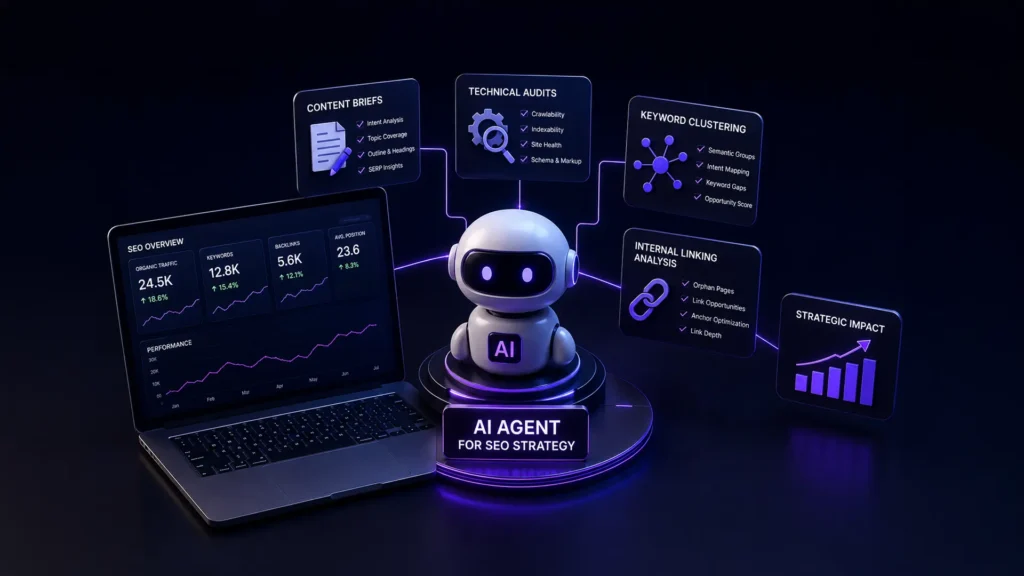
SilverXis has spent the better part of a year running an AI agent for SEO strategy across live client accounts, not as a proof-of-concept sitting in a slide deck, but as core infrastructure powering content briefs, technical audits, keyword clustering, and internal linking analysis. This report distills that operational experience into a practical field guide.